

You know that feeling when you open your banking app and immediately close it because you don’t want to know? Yeah, me too. Maybe you downloaded a fancy app, color coded a beautiful spreadsheet, or promised yourself this would be the month you finally got your finances together, only to abandon the whole thing by week three. If that sounds familiar, I want you to know something important. The problem isn’t you, it’s probably just the budgeting methods you chose.
Here’s what nobody tells you when you’re starting out, budgeting isn’t a one-size-fits-all situation. What works brilliantly for your super organized coworker might feel like a straightjacket to you. And the carefree approach your best friend swears by might leave you feeling anxious and out of control. The secret to budgeting success isn’t finding the perfect system that works for everyone, because that unicorn doesn’t exist. Instead, it’s about discovering the approach that fits your personality, your lifestyle, and your actual goals (not the goals you think you should have).
In this guide, we’re going to explore five different budgeting methods that real people use to manage their money without losing their minds. Think of this as a budgeting buffet where you get to sample different options, mix and match what works, and leave behind what doesn’t. By the end, you’ll have a clear idea of which approach might be your perfect financial match, and more importantly, you’ll feel empowered to actually stick with it this time.
And if you’re still at the very beginning and just want a simple way to get started without stressing over math, you might also find How to Build a Beginner Budget Even If You Hate Numbers helpful as a next step.
The 50/30/20 Rule: The Balanced Approach
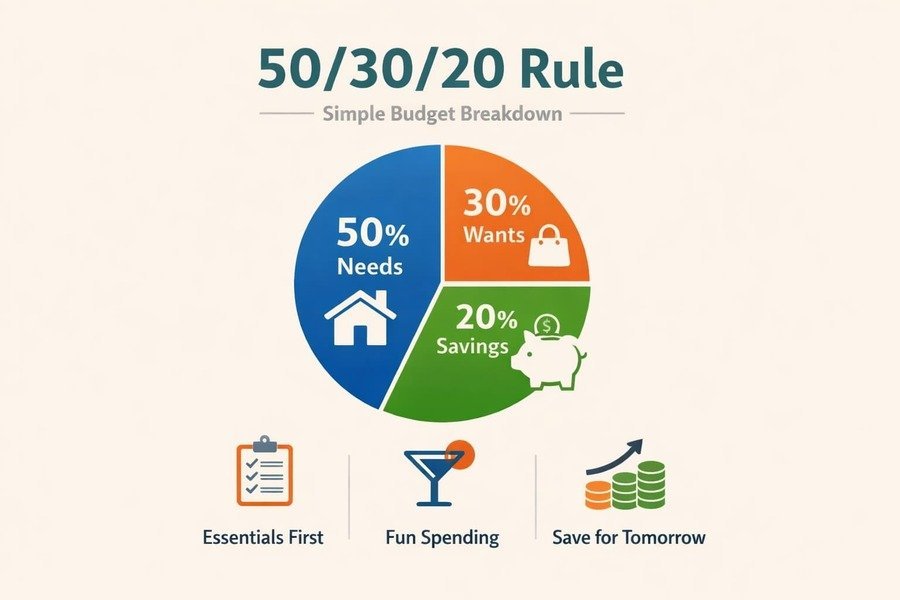
If you’re the kind of person who loves simplicity and hates overthinking every purchase, the 50/30/20 rule might just become your new best friend. This method breaks down your after-tax income into three straightforward categories: 50% for needs, 30% for wants, and 20% for savings and debt repayment. That’s it, no complicated spreadsheets or tracking every single coffee purchase required.
Here’s how it works in real life. Let’s say you bring home $3,500 a month after taxes. You’d allocate $1,750 to your needs (rent, utilities, groceries, insurance, minimum debt payments), $1,050 to your wants (dining out, streaming services, hobbies, that new jacket you’ve been eyeing), and $700 to savings and extra debt payments. The beauty of this approach is that once you’ve set up your basic framework, you have a lot of freedom within each category to spend as you see fit.
This method works incredibly well for people who are just starting their budgeting journey or anyone who’s felt paralyzed by more detailed systems in the past. It’s also fantastic if you have a relatively stable income and your expenses don’t wildly fluctuate from month to month. The wiggle room built into each category means you won’t feel like you’re living on a restrictive diet where one cheat day ruins everything.
That said, you’ll want to be realistic about what counts as a need versus a want. Your gym membership might feel essential to your wellbeing, but technically it falls into the wants category. The key is being honest with yourself while also not being so strict that you feel deprived. If your needs are currently eating up 65% of your income, don’t panic, this just means you might need to adjust the percentages to something like 60/25/15 until you can work on reducing your fixed expenses or increasing your income.
Zero-Based Budgeting: Every Dollar Has a Job
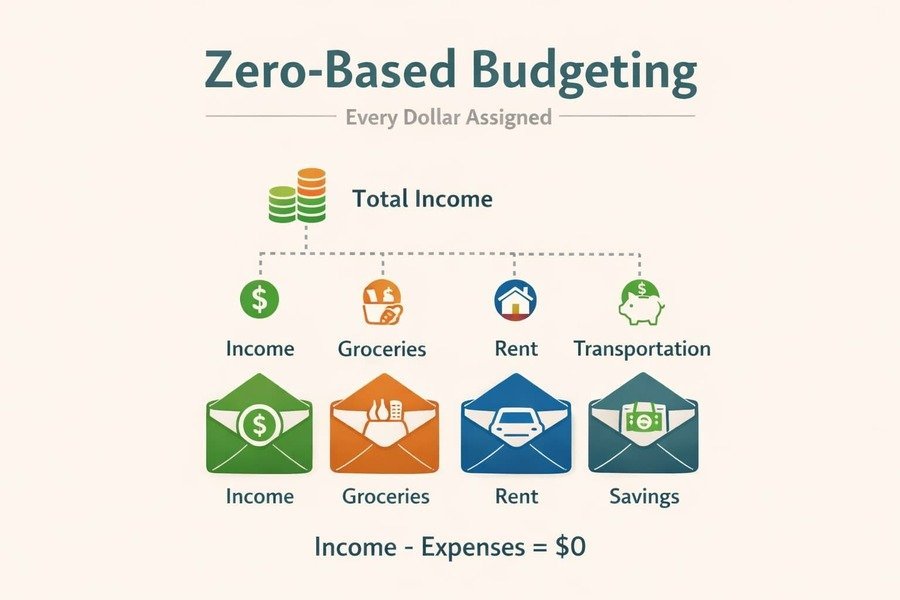
If you’re someone who genuinely enjoys the feeling of being in control, zero-based budgeting might be your perfect match. This approach is ideal if you like knowing exactly where your money is going. The concept is beautifully straightforward: every single dollar you earn gets assigned a specific job before the month even begins, which means your income minus your expenses should equal zero. Before you panic thinking this sounds impossibly rigid, hear me out, because this method is actually incredibly flexible once you understand how it works.
Here’s the magic of zero-based budgeting. At the start of each month, you sit down and tell every dollar where to go, whether that’s rent, groceries, your emergency fund, your “coffee shop treats” category, or your “spontaneous adventure” fund. The beauty is that you’re not restricting yourself from fun spending, you’re just being intentional about it. If you want to allocate $200 to dining out this month, that’s totally fine, you’ve just made that decision consciously rather than wondering where all your money went at the end of the month.
This approach works brilliantly for detail-oriented people who get satisfaction from having a plan and sticking to it. It’s also fantastic if you’re working to pay off debt because it forces you to be strategic about every dollar and find creative ways to free up extra money for those payments. People who love spreadsheets, apps, or systems tend to thrive with this method because there’s a certain satisfaction in seeing everything add up perfectly at the end of the month.
The key to making zero-based budgeting work without driving yourself crazy is building in buffer categories. Create line items for “miscellaneous” or “stuff I forgot” because life happens and you will inevitably need to buy something you didn’t anticipate.
Also, be prepared to adjust as you go, especially in your first few months. You might realize you budgeted way too little for groceries or way too much for gas, and that’s totally normal. The goal isn’t perfection from day one, it’s learning your actual spending patterns so you can make increasingly accurate plans each month. Think of it as a living document that evolves with your real life, not a prison sentence you’re stuck with forever.
If you’re trying to get more intentional with your money between paychecks, this pairs really well with 7 Smart Financial Steps to Take Before Your Next Paycheck, especially when cash flow feels tight.
The Envelope System: The Tangible Approach
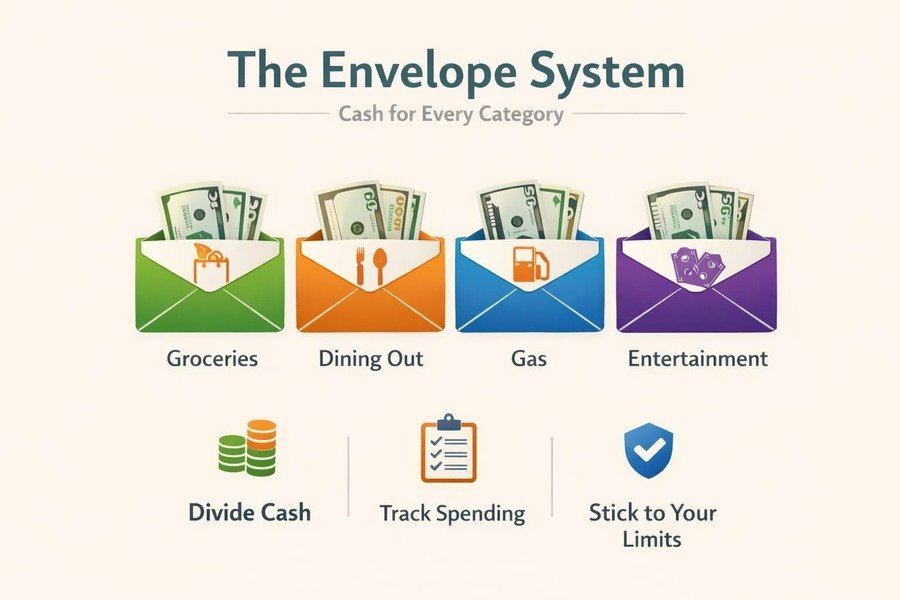
There’s something psychologically powerful about physically handling money, and the envelope system taps into that ancient part of our brain that responds to tangible limits. The traditional version is delightfully old-school. You withdraw your spending money in cash, divide it into labeled envelopes for different categories like groceries, entertainment, and gas, and when an envelope is empty, you’re done spending in that category for the month. It sounds almost quaint in our digital age, but people who use this method swear by it because there’s an immediate, visceral feedback that’s impossible to ignore when you hand over actual bills.
Now, before you dismiss this as impractical for modern life, let me tell you about the digital evolution of this method. Plenty of banking apps now let you create virtual envelopes or spending buckets that work on the same principle without requiring you to carry wads of cash everywhere. You can set up separate savings pockets in your checking account, use apps that round up purchases and sort them into categories, or even open multiple checking accounts for different spending purposes. The principle remains the same, once the money in that category is gone, you wait until next month to spend more.
This method is absolutely perfect for visual learners and people who tend to overspend when using cards because the money feels abstract. If you’ve ever looked at your bank statement in horror wondering where all your money went, the envelope system forces you to confront your spending in real time rather than weeks later when it’s too late to do anything about it. It’s also incredibly effective for specific problem areas in your budget, you don’t have to envelope everything, just the categories where you consistently overspend.
The biggest challenge with the traditional cash envelope system is that our world increasingly doesn’t accept cash. From online shopping to automatic bill payments to that food delivery app you use way too often, cash just isn’t always practical. This is why most people who love this method adapt it to work with their actual lifestyle.
Maybe you use cash envelopes for groceries and dining out where you have the most temptation to overspend, but keep everything else digital. Or you use a hybrid app that gives you the visual satisfaction of emptying envelopes without requiring you to visit an ATM every week. The key is capturing that psychological benefit of seeing your available money shrink in real time, which makes you naturally more cautious about each purchase without feeling deprived.
Pay Yourself First: The Reverse Budget
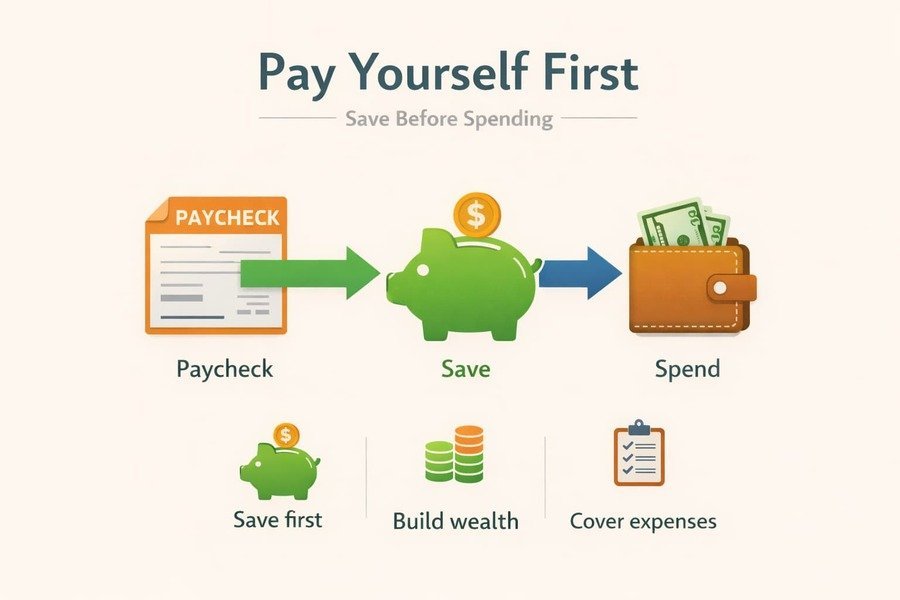
What if I told you that you could build wealth without obsessing over every expense or feeling guilty about your spending habits? The pay yourself first method flips traditional budgeting on its head by prioritizing your future self before anyone else gets a piece of your paycheck. Instead of saving whatever’s left over at the end of the month (spoiler alert: there’s usually nothing left), you automatically move money into savings and investments the moment your paycheck hits your account, then spend whatever remains guilt-free.
Here’s the brilliant psychology behind this approach. When you commit to saving a specific percentage or dollar amount first, your brain naturally adjusts your spending to fit what’s left rather than the other way around. It’s like when you get a pay cut and somehow manage to make it work, except in reverse and way more positive. You set up automatic transfers on payday to move money into your emergency fund, retirement accounts, investment accounts, or whatever financial goals you’re working toward, and then you live your life with what remains without constantly second guessing every purchase.
This method is absolutely perfect for people who are good earners but struggle with the discipline of traditional budgeting, or anyone who finds detailed expense tracking tedious and soul crushing. It’s also ideal if you’re focused on long-term wealth building rather than penny pinching your way through life. The beauty is that you’re making progress toward your financial goals automatically, which means even if you have a month where you spend more than usual on wants, your savings goals are already handled and you don’t have to feel like you’ve derailed everything.
The key to making this work is being realistic about how much you can truly afford to pay yourself first. If you’re aggressive and try to save 40% of your income when your actual expenses require 80%, you’ll just end up constantly transferring money back from savings, which defeats the entire purpose and feels demoralizing.
Start with a manageable percentage, even if it’s just 10% or 15%, and gradually increase it as you get raises or pay off debts. You can absolutely combine this with other methods too, maybe you pay yourself first for retirement and long-term goals, but use the envelope system for groceries where you tend to overspend. The goal is building wealth in a way that feels sustainable and doesn’t require you to hate your life or never have any fun.
The Anti-Budget: The Freedom Method
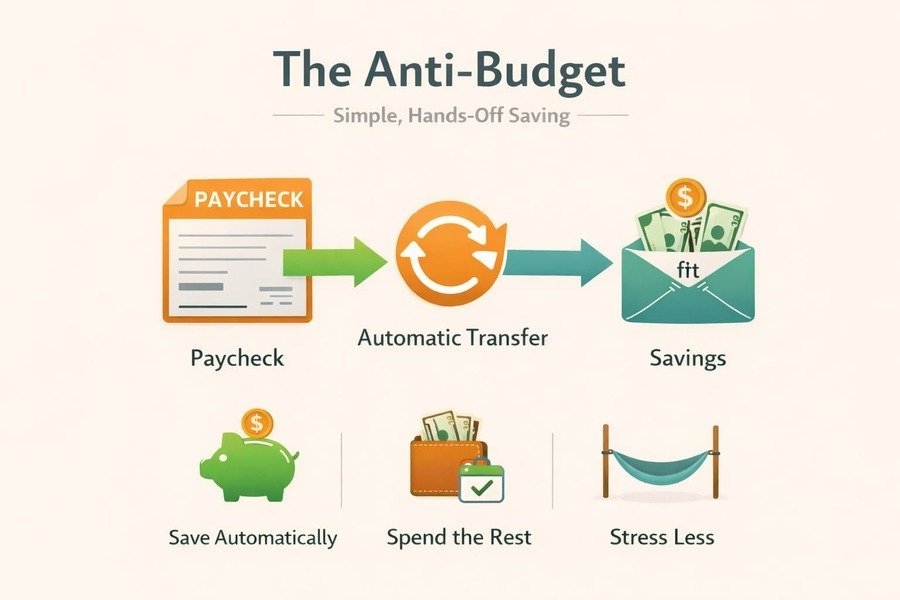
For those of you who just felt your soul leave your body reading about all these structured approaches, I have good news! There’s a method designed specifically for people who hate budgets with the fire of a thousand suns. The anti-budget, sometimes called conscious spending, is less about tracking every penny and more about knowing your numbers well enough to spend freely on what matters while cutting ruthlessly on what doesn’t. It’s the budgeting method for people who refuse to budget, and paradoxically, it often works brilliantly.
Here’s how it works in practice. You figure out your essential fixed costs (rent, utilities, insurance, minimum debt payments) and make sure those are covered automatically. Then you determine how much you want to save or invest each month and automate that too. Everything else? Spend it however you want without guilt or tracking. The freedom comes from knowing that your bases are covered, so if you want to drop $200 on concert tickets or treat yourself to an expensive dinner, you can do it without worrying that you’re sabotaging your future or forgetting to pay the electric bill.
This method works best for people with variable income (like freelancers or commission-based workers) or anyone who has a good intuitive sense of their spending and doesn’t need detailed tracking to stay on track. It’s also perfect for high earners who have plenty of income to cover both their needs and wants without stress. The key requirement is that you need to be honest with yourself about what you’re actually spending and have enough self awareness to notice if your discretionary spending starts creeping up to unsustainable levels.
The potential pitfall of the anti-budget is that it requires more financial maturity and self awareness than other methods. If you’re someone who tends to overspend when given freedom, or if money just seems to disappear from your account without you understanding where it went, this approach might give you too much rope to hang yourself with. But if you’re naturally pretty responsible with money and just hate the tedious admin of traditional budgeting, the anti-budget can be incredibly liberating. The secret is checking in with yourself periodically to make sure your spending aligns with your values and that you’re still hitting your savings targets, even if you’re not tracking every transaction along the way.
Finding Your Perfect Match
So here’s the truth that nobody wants to tell you about budgeting: the best method is whichever one you’ll actually stick with for more than three weeks. You might try the 50/30/20 rule and realize you need more granular control, so you switch to zero-based budgeting. Or maybe you start with the envelope system and eventually evolve into paying yourself first because you’ve built enough discipline. That’s not failure, that’s growth and self awareness.
Give yourself permission to experiment and mix methods too. Maybe you pay yourself first for long-term savings, use the 50/30/20 rule for your monthly spending categories, and throw in some cash envelopes for your problem areas. Personal finance is called personal for a reason, there’s no award for using someone else’s system perfectly if it makes you miserable. The goal isn’t to win at budgeting, it’s to build a life you love while also securing your financial future.
Start small this week. Pick one method that resonated with you while reading this and try it for just one month. Not forever, not even for three months, just thirty days. Track how it feels, notice what works and what frustrates you, and adjust from there. Your relationship with money is going to evolve over your entire lifetime, so stop putting so much pressure on yourself to figure it all out perfectly right now. Take the first step, learn from it, and keep moving forward. Your future self will thank you for starting today, even if your system isn’t perfect yet.
Want more money tips that work? Get one practical money tip each week, delivered in a simple, realistic way. Subscribe to the Cash Clarity Finance newsletter and keep building better money habits, one step at a time.