
Groceries are one of the few major expenses that respond immediately to small changes in habit. Unlike rent or loan payments, which are fixed until circumstances change significantly, your food budget adjusts every time you shop. That flexibility is both an opportunity and a trap: it’s the category where savings are most accessible and also the one where unintentional overspending accumulates most invisibly.
The approaches in this guide save money without requiring you to eat less well, buy food you don’t enjoy, or spend your weekends cooking elaborate meal-prep systems. Quality stays intact, what changes is how intentionally you shop.
Lets explore how to save money on groceries with simple steps you can follow.
Plan Your Meals Before You Shop
This is the single habit with the largest impact on grocery spending, and it works through three mechanisms simultaneously. It eliminates the expensive “there’s nothing to eat” moments that lead to spontaneous takeout. It produces a focused shopping list that prevents impulse additions. And it reduces food waste by ensuring everything purchased has a planned use before it spoils.
The meal plan doesn’t need to be elaborate. Knowing roughly what you’ll eat for dinner five nights a week, what lunches you’ll make, and what breakfast staples you need is sufficient. A fifteen-minute planning session before shopping typically saves more per trip than any other single approach, and the savings are consistent rather than occasional.
Don’t miss → 12 Easy Ways to Cut Your Monthly Expenses
Shop With a List and Don’t Deviate
A shopping list turns a grocery trip from an open-ended browsing experience into a targeted mission. Supermarkets are designed to encourage unplanned purchases through product placement, promotional displays, and sensory triggers. A specific list creates a competing agenda that counters those design decisions.
The saving comes not from what’s on the list but from what’s not on it. The items that don’t make it into the cart because they weren’t written down, and because the list created a clear boundary between planned and unplanned spending, are where the budget improvement lives.
Check Your Pantry and Fridge Before Shopping
The average household throws away a meaningful percentage of its food every week. Some of that waste is inevitable. Most of it is the result of buying items already at home, buying more than can be consumed before expiry, and failing to use what’s already available before purchasing more.
A quick review of what’s already in the kitchen before building a shopping list prevents duplicates, surfaces ingredients that need to be used soon, and often generates meal ideas that reduce how much new purchasing is needed. The five minutes this takes consistently produces savings by reducing waste rather than requiring more careful spending.
Buy Store Brands for Most Categories
Supermarket own-brand products have improved dramatically in quality across most categories. For pantry staples, cleaning products, personal care items, dairy, and most packaged goods, the quality difference between branded and store-brand alternatives is negligible to nonexistent. The price difference is not.
A systematic shift to store brands across your regular purchases typically reduces grocery spending by 15 to 30 percent with no change to what you’re actually eating or using. The categories where branded products genuinely outperform store brands are narrower than most people assume: a few specialty items, some produce where quality is more variable, and specific products where a particular formulation matters to you. For everything else, the branded premium is paying for marketing rather than quality.
Compare Cost Per Unit, Not Package Price
Supermarkets display price per unit, per 100 grams, or per 100 milliliters for most products, and this information is significantly more useful than the headline package price. A larger package isn’t always cheaper per unit, a promoted product isn’t always a better deal than the regular-priced alternative nearby, and a different brand of the same product in a slightly different size may be considerably cheaper per gram.
The habit of checking unit price rather than package price before placing anything in the cart takes a few extra seconds per item and consistently surfaces savings that the headline prices obscure.
Reduce Meat Consumption Strategically
Meat is consistently one of the most expensive items in the grocery budget. Replacing a few meat-based dinners per week with plant-based alternatives, eggs, legumes, or dairy-based proteins produces meaningful savings without requiring a complete dietary change.
This isn’t a prescription for vegetarianism. It’s a recognition that two or three dinners per week built around lentils, beans, eggs, or cheese typically cost significantly less than the equivalent meat-based meals, and that the nutritional quality is comparable. The saving accumulates without any reduction in the quality of the food on the table.
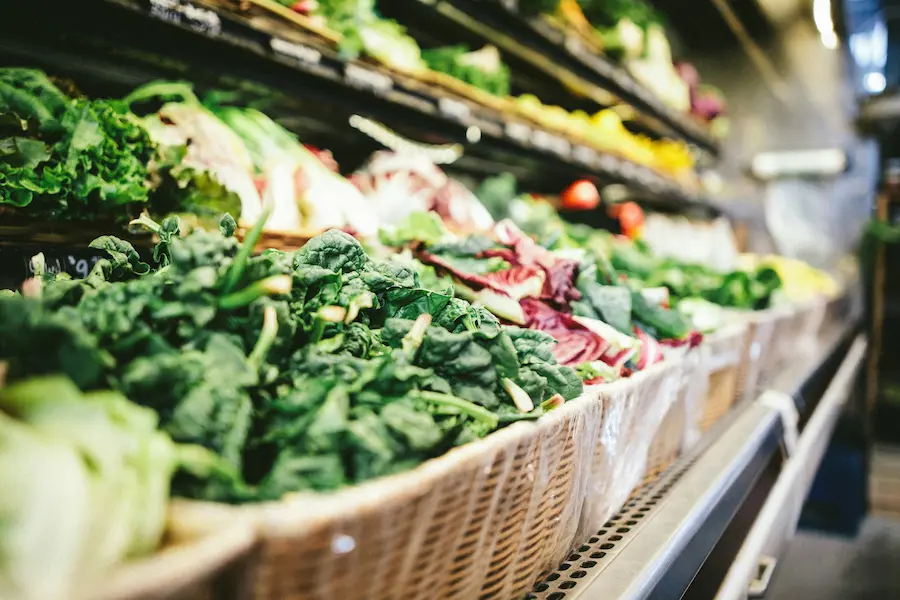
Shop Seasonally for Produce
Out-of-season produce is more expensive than in-season produce for a simple reason: it’s either imported from where it is in season or grown artificially, both of which add cost. Produce that’s in season locally is more abundant, travels less distance, and prices accordingly.
Shifting toward seasonal produce for fresh items doesn’t require giving up anything permanently. It means eating asparagus in spring, tomatoes in summer, root vegetables in autumn, and citrus in winter. The quality of seasonal produce tends to be better than out-of-season alternatives as well as cheaper, making this a case where the budget-friendly choice and the quality choice align.
Use Cashback Apps and Loyalty Programs
Cashback apps like Ibotta, Rakuten, and Fetch Rewards pay a percentage back on grocery purchases made through their platforms or scanned receipts. Supermarket loyalty programs provide points, discounts, and personalized offers on frequently purchased items.
Neither of these approaches changes what you buy. They add a layer of return on purchasing you were going to do regardless. The key is that these tools should follow your shopping decisions rather than drive them: using a cashback offer to buy something you wouldn’t otherwise purchase isn’t saving money, it’s spending more with a partial discount.
Shop the Perimeter of the Store First
The layout of most supermarkets places fresh produce, meat, dairy, and bakery items around the perimeter of the store. The inner aisles contain processed and packaged goods. Shopping the perimeter first fills the cart with fresh, whole ingredients that tend to be both cheaper per nutritional value and the building blocks of home-cooked meals.
This isn’t a rule to follow rigidly, but as a starting orientation it keeps the cart balanced toward fresh ingredients and away from the high-margin processed products positioned prominently in the central aisles.
Batch Cook and Freeze
Cooking in larger quantities and freezing portions reduces food waste, eliminates the weeknight temptation to order delivery, and costs significantly less per meal than cooking or buying individual portions.
A pot of soup, a tray of roasted vegetables, a batch of cooked grains, or a double recipe of whatever is being made for dinner tonight all freeze well and provide ready meals for the weeks ahead. The cost per serving of home-cooked frozen meals is typically a fraction of both restaurant alternatives and convenience food equivalents, and the quality is entirely within your control.
Compare Prices Across Stores for Your Regular Items
Most households do all their grocery shopping at a single supermarket out of habit and convenience. For most standard pantry items, meaningful price differences exist between stores that add up to significant savings across a year of shopping.
This doesn’t require shopping at five different stores every week. It means being aware of which store offers better prices on the items you buy most often and, where the difference is significant, making a separate stop or occasional visit worthwhile. Some items may save enough to justify buying in larger quantities at a cheaper store less frequently, reducing the number of trips required.
Buy in Bulk Selectively
Bulk buying saves money on items with a long shelf life that you use consistently and have space to store. Non-perishables like rice, pasta, oats, tinned goods, coffee, and household staples like toilet paper and cleaning supplies are natural candidates. Buying in bulk only makes financial sense when the item won’t go to waste before it’s used, when the bulk option is genuinely cheaper per unit, and when storage space accommodates the quantity.
Buying perishables in bulk rarely saves money and often costs more through waste. Buying items you don’t use regularly in bulk ties up money in inventory that may sit unused.
Don’t miss → Best Cheap Meal Ideas for a Tight Grocery Budget That Taste Good
The Mindset Shift: Intentional Spending Is Better Eating
A counterintuitive truth about reducing grocery spending is that it often improves the quality of what’s being eaten rather than reducing it. The person who plans meals uses fresher ingredients with less waste. The person who shops the perimeter eats more whole foods. The person who cooks in batches eats home-cooked food more often than takeout alternatives.
The connection between financial intentionality and food quality is real and often underappreciated. Spending thoughtlessly on food doesn’t produce better meals. It produces more waste, more convenience food, more last-minute decisions that prioritize ease over nourishment or enjoyment.
I’ve found that the households that eat well consistently tend to plan their eating and shopping with some degree of intention, not because they have more money but because intention applied to food produces better outcomes regardless of budget. That intentionality also happens to cost less. The two things reinforce each other.
Frequently Asked Questions
How much can I realistically save on groceries with these habits?
It varies significantly by current spending and household size, but applying five or six of these consistently typically reduces grocery spending by 15 to 30 percent for most households. For a family spending $600 per month on groceries, that’s $90 to $180 per month recovered without eating differently in any meaningful way.
Do I have to give up branded products entirely?
No. The point is to switch to store brands where the quality difference is negligible, which covers most pantry staples and household products. Keeping branded products in the categories where you genuinely notice and value the difference is a reasonable and consistent approach. The switch doesn’t need to be all-or-nothing to produce meaningful savings.
Is meal planning worth the time it takes?
Consistently, yes. The fifteen minutes spent planning before a shopping trip is typically recovered many times over in reduced food waste, fewer impulse purchases, and eliminated last-minute takeout decisions. The time investment also tends to decrease as meal planning becomes habitual rather than effortful.
How do I handle unexpected price increases on regular items?
Keep a rough awareness of the usual price for your most frequently purchased items. When a regular item increases significantly in price, it’s worth checking whether the store brand or a competitor’s equivalent is cheaper. Price increases on branded goods are often the moment when store brands become a natural and financially sound switch.
Does buying cheaper food mean eating less healthily?
No, and in many cases the opposite is true. Pulses, legumes, eggs, seasonal vegetables, whole grains, and dairy are all affordable and nutritionally dense. The most expensive foods are often heavily processed convenience products rather than high-quality fresh ingredients. A budget-conscious approach to grocery shopping that emphasizes whole ingredients typically produces a more nutritious diet than one focused on premium packaged products.
What’s the single most impactful change for someone who has never tracked grocery spending?
Start with meal planning. Knowing what you’re going to eat before you shop eliminates the two biggest drivers of grocery overspending: buying without a clear plan and ordering food when there’s nothing ready to cook at home. Once that habit is in place, the other changes are easier to layer on top.
Small Habits, Consistent Savings
None of the approaches in this guide require dramatic lifestyle changes or significant sacrifices. They require slightly more intentionality than shopping on autopilot, which is all that separates most households from meaningful, consistent grocery savings.
Applied together over a month, they produce results that feel disproportionate to the effort involved. Applied consistently over a year, they free up enough in the budget to make a real difference to savings, debt repayment, or whatever financial goal they’re redirected toward.
Ready to make smarter money moves? Explore more guides on side hustles, budgeting, investing, and building wealth right here. Join the Cash Clarity Finance Newsletter to get clear, actionable tips that help your money work for you.