

Ever stared at your bank account after a “surprise” car repair or a sudden need for a new washing machine and thought, “Seriously, budget, why do you betray me?!” You’re not alone. That feeling of financial whiplash usually means you’re missing a key player in your money game: sinking funds. And trust me, once you meet a sinking funds tracker, your wallet will thank you.
What are Sinking Funds, Anyway? (And Why You Need Them)
Alright, let’s cut to the chase. What even is a sinking fund? Think of it like a mini-savings account, but for specific, non-monthly expenses you know are coming. We’re talking about things like annual car insurance premiums, holiday gifts, home repairs, that epic vacation you’re dreaming of, or even your pet’s yearly vet check-up. These aren’t emergencies, per se, but they’re not your regular bills either.
Instead of scrambling when these expenses pop up, a sinking fund lets you slowly, steadily save for them over time. Imagine setting aside a small amount each month for Christmas presents. When December rolls around, boom! The money is already there. No credit card debt, no stress, just pure, unadulterated financial zen. It’s truly a game-changer for your peace of mind.
Why do you need them? Because life happens, my friend. And often, life’s “happenings” come with a price tag. Sinking funds help you smooth out those financial bumps, turning potential budget disasters into well-funded plans. They stop those “surprise” expenses from derailing your entire monthly budget.
Why a Tracker is Your New BFF (Best Financial Friend)

You might be thinking, “Can’t I just keep a mental note?” Oh, bless your optimistic heart. We both know how well that usually works out. Our brains are fantastic for remembering where we left our keys, not so much for tracking five different savings goals with varying deadlines and amounts. That’s where a dedicated sinking funds tracker swoops in like a financial superhero. A tracker gives you a clear, visual overview of all your sinking funds.
You can see exactly how much you need for each goal, how much you’ve saved so far, and how much you still need to contribute. This transparency is incredibly motivating. It’s like watching your progress bar fill up in a video game, but instead of unlocking a new level, you’re unlocking financial freedom.
Plus, it keeps you accountable. When you see those numbers staring back at you, it’s harder to “borrow” from your vacation fund for an impulse purchase. The tracker becomes your financial conscience, gently reminding you of your goals. IMO, it’s the single most effective tool for managing these specific savings pots.
Setting Up Your Sinking Funds Tracker: The Nitty-Gritty
Okay, ready to get down to business? Setting up your tracker isn’t rocket science, but it does require a little upfront thought. Don’t worry, I’ll walk you through it. This is where our free template really shines, giving you a ready-made structure to plug your numbers into.
Identifying Your Sinking Funds Categories
First things first, you need to figure out what you’re actually saving for. Grab a pen and paper (or open a new tab if you’re digital-first) and brainstorm every irregular expense you can think of.
Here are some common categories to get you started:
- Annual Bills: Car insurance, property taxes, professional memberships, software subscriptions.
- Holidays & Gifts: Christmas, birthdays, anniversaries, Mother’s/Father’s Day.
- Home Maintenance: Appliance repairs, roof fund, new furniture, seasonal decor, garden supplies.
- Car Maintenance: New tires, oil changes, registration, unexpected repairs.
- Travel: Weekend getaways, international trips, flight funds.
- Personal Care: Haircuts, spa days, new wardrobe, dental work (beyond insurance).
- Pet Care: Annual vet visits, grooming, special food, emergency pet fund.
- Kids’ Activities: Sports fees, school trips, summer camp.
- Medical: Deductibles, co-pays, prescriptions (if not covered by an HSA).
Don’t hold back! List everything that causes you a financial headache when it arrives. You can always refine later.
Setting Realistic Goals and Deadlines
Once you have your categories, it’s time to put some numbers and dates to them. For each sinking fund, ask yourself:
- How much money do I need for this? Be as specific as possible. If it’s Christmas, how much do you typically spend? If it’s car insurance, look up your last bill.
- When do I need this money by? Is it due in 6 months, 12 months, or a specific date?
Let’s do an example. Say you need $1200 for annual car insurance in 12 months. Or, you want to save $600 for holiday gifts by December (which is 8 months away from, say, April). Write these down next to each category. This clarity is crucial.
Calculating Your Monthly Contributions
Now for the fun part: crunching the numbers! This is where you figure out how much you need to set aside each month for each fund. It’s simple math, really. Total Goal Amount / Number of Months Until Deadline = Monthly Contribution Let’s use our examples:
Car Insurance: $1200 / 12 months = $100 per month
Holiday Gifts: $600 / 8 months = $75 per month
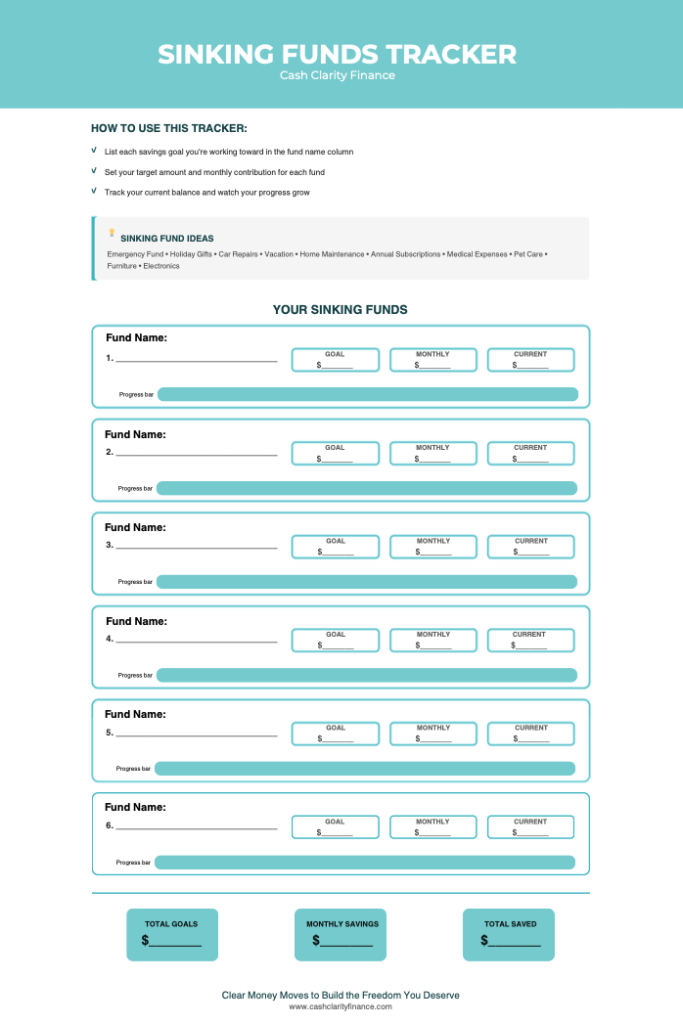
Do this for every single one of your sinking fund categories. Our free template will have columns for “Goal Amount,” “Deadline,” and “Monthly Contribution” to make this super easy. Add up all your monthly contributions. This total tells you how much you need to set aside each month specifically for your sinking funds. If that number feels too high, you might need to adjust some goals or extend some deadlines. It’s a flexible system, remember!
Putting Your Tracker to Work: Daily/Weekly/Monthly Habits
A tracker is only as good as its user, right? So, let’s talk about how to actually use this thing consistently. This isn’t just a spreadsheet you fill out once and forget. It’s a living document that needs a little love.
First, set up a dedicated savings account (or multiple accounts) for your sinking funds. This is key. Don’t just leave the money in your checking account where it’s easy to accidentally spend. Many banks allow you to create sub-accounts or “buckets” within a single savings account, which is perfect for this. Label them clearly: “Vacation Fund,” “Car Repair,” “Christmas,” etc.
Next, automate your contributions. This is probably the most important step. Set up automatic transfers from your checking account into your sinking funds savings account(s) on payday. If you need $100 for car insurance and $75 for gifts, set up transfers for those amounts. Out of sight, out of mind, and into your savings!
Then, check in with your tracker regularly. I recommend a quick check-in once a week or at least once a month. Update the “Amount Saved” column. See how close you are to your goals. This consistent interaction keeps you motivated and allows you to make adjustments if needed. Maybe you got a bonus and can contribute extra to your vacation fund? Or maybe you had an unexpected expense and need to temporarily pause a less urgent fund. The tracker makes these decisions clear.
Troubleshooting Your Sinking Funds Journey
Let’s be real, no financial journey is perfectly smooth. You’re going to hit bumps. Here’s how to navigate them with your sinking funds tracker:
What if you can’t meet all your monthly contributions? Don’t panic. This isn’t a pass/fail test. Revisit your goals. Can you push back the deadline for a less urgent fund? Can you reduce the goal amount slightly? Prioritize the most critical funds (like annual bills) and adjust the others. It’s better to contribute something than nothing at all.
Sometimes, you might find you overestimated or underestimated a goal. That’s totally fine! Your car repair might be less than you thought, or your holiday spending might creep up. Just update the “Goal Amount” in your tracker and recalculate your monthly contributions. It’s a dynamic tool, not a rigid rulebook.
Finally, don’t let perfection be the enemy of good. If you miss a month or fall a little behind, just pick yourself up and start fresh next month. The goal is progress, not perfection. The tracker helps you see where you are, so you can always adjust your course.
The Free Template: Your Shortcut to Sanity
Ready to take control of your irregular expenses? I created a simple, beginner-friendly sinking funds tracker to help you organize your goals, calculate monthly contributions, and track your progress all in one place. Download the free template below and start planning your expenses with confidence today.
Frequently Asked Questions
Can I use a sinking fund for emergencies?
Not really, and here’s why: an emergency fund is for unexpected emergencies like job loss, medical crises, or major home repairs that you couldn’t possibly predict. A sinking fund is for expected but irregular expenses. While a car repair might feel like an emergency, if you know your car is getting older, you can anticipate future maintenance. Think of it this way: emergencies are “what ifs,” sinking funds are “when it happens.” Keep those two funds separate for clarity and peace of mind.
What if I can’t contribute the full amount one month?
It happens to the best of us! Don’t beat yourself up. The beauty of a sinking funds tracker is its flexibility. If you can’t contribute the full amount, contribute what you can. Then, when you’re back on track, you can either try to make up the difference in a future month, or simply adjust your goal amount or deadline. The tracker helps you visualize the impact of these changes, empowering you to make informed decisions without guilt.
How often should I review my sinking funds?
A monthly review is ideal. This usually aligns with when you pay bills and review your overall budget. Take 15-30 minutes to update your “Amount Saved” column, check your progress, and make any necessary adjustments to goals or contributions. If you’re feeling particularly on top of things, a quick weekly check-in can also be beneficial, especially if you have a lot of active funds or are close to a deadline.
Is this just another budget?
Not exactly, but it works with your budget. Your main budget covers your regular, recurring monthly expenses like rent, groceries, and utilities. Sinking funds are a category within your budget, specifically for those irregular, non-monthly expenses that often get forgotten. They prevent those larger, less frequent costs from blowing up your regular monthly spending plan. Think of it as a specialized tool within your broader financial toolkit.
What’s the difference between a sinking fund and general savings?
General savings are typically for long-term goals or a rainy day without a specific purpose attached. You might have a general savings account for “future me” or just to build wealth. A sinking fund, however, is highly specific and goal-oriented. Each dollar in a sinking fund has a job and a deadline. It’s the difference between saving for “something important” versus saving for “that new couch I want by October.”
Your Financial Future Just Got a Whole Lot Brighter
There you have it. Sinking funds aren’t some fancy financial jargon; they’re a practical, powerful tool for managing your money like a boss. They turn those dreaded “surprise” expenses into manageable, planned-for events, giving you incredible control over your finances. With a dedicated tracker, you’ll not only save money but also save yourself a ton of stress. So, grab that free template, start plugging in your numbers, and watch your financial confidence soar. You’ve got this!
Ready to keep building your money skills? Explore more guides on side hustles, budgeting, investing and more right here.