
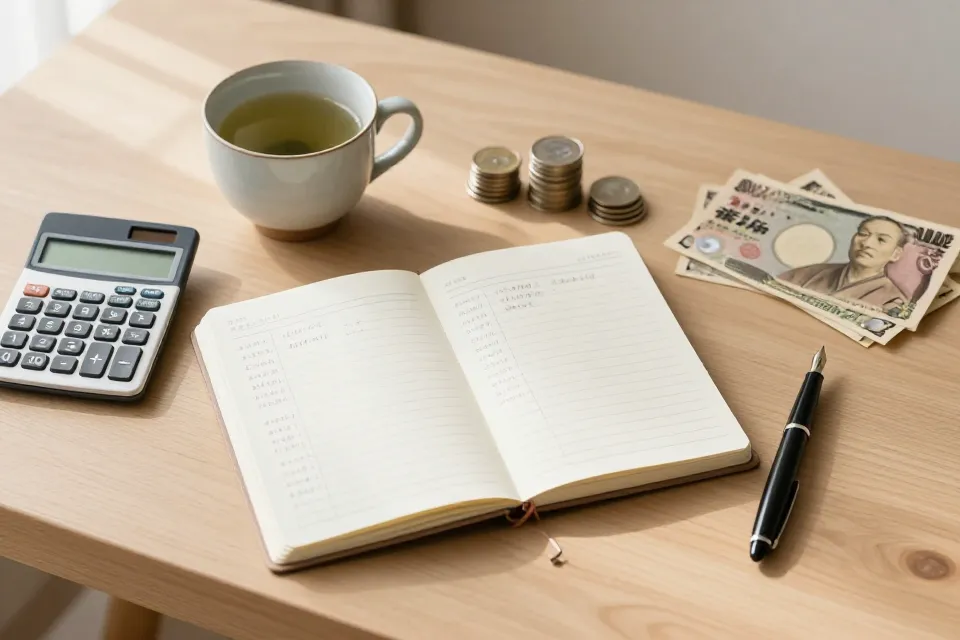
There is something quietly radical about a budgeting system that begins not with a spreadsheet but with four questions. What do you have? What do you need? How much are you spending? How can you improve? Kakeibo, the Japanese household budgeting method that has been practiced since 1904, is built around this reflection-first approach rather than the tracking-first approach most modern budgeting systems favor.
The method was created by Hani Motoko, a pioneering Japanese journalist who published it in a women’s magazine as a practical tool for managing household finances. More than a century later it remains in widespread use in Japan, where the discipline of recording spending by hand and reflecting on it regularly is considered as natural a household skill as cooking.
The reason the Kakeibo budgeting method endures is that it addresses something most budgeting systems miss: not just where money goes, but what the person spending it actually thinks and feels about those decisions, and how awareness of those patterns can produce genuinely different behavior.
What Kakeibo Actually Is
Kakeibo, pronounced kah-keh-bo, translates roughly as household financial ledger. The system is intentionally analog: it is kept in a physical notebook and written by hand. The act of writing each transaction manually, rather than importing it automatically from a bank account, is not an inefficiency to be solved but a feature that produces the engagement with spending that makes the method work.
The system divides all spending into four categories that are simpler and more psychologically honest than the elaborate category structures of most budgeting systems:
Survival: Food, housing, utilities, transportation, medication, and anything genuinely necessary for daily life to function.
Optional: Dining out, entertainment, hobbies, shopping for non-essentials, and anything that improves quality of life beyond the basics.
Culture: Books, museums, cinema, concerts, educational courses, and anything that feeds intellectual or cultural development.
Unexpected: Medical emergencies, home repairs, unexpected travel, and any expense that arrived without being planned.
At the start of each month, income is recorded and the month’s fixed expenses are subtracted. The remaining amount is the budget for the month. The Kakeibo user decides how much they want to save that month before spending begins and writes it down as a commitment rather than an aspiration.
Don’t miss → How the Paycheck Budgeting Method Works
The Four Monthly Questions
Kakeibo is structured around four questions answered at the start and end of each month. These questions are not administrative. They’re reflective, and the quality of the answers matters as much as the accuracy of the numbers.
How much money do you have? This is the concrete starting point. Income for the month, any savings already set aside, and any other available funds. The number before any spending decisions are made.
How much would you like to save? Not how much you think you can save after everything else is covered, but how much you intend to save before spending begins. This shifts savings from an afterthought to an intention that shapes the spending decisions that follow it.
How much are you spending? The tracking component. Every transaction is written in the notebook manually throughout the month, categorized into the four categories, and totaled weekly. The week-by-week view of spending pace against available budget is more actionable than a monthly total reviewed after the month is over.
How can you improve? The reflective closing question, answered at the end of each month. Not just whether the savings goal was met or missed, but what specific spending decisions drove the outcome, which category was most problematic, what triggered the purchases that were later regretted, and what one change in the coming month might produce a different result.
This fourth question is what distinguishes Kakeibo from simple expense tracking. Most budgeting systems track what happened. Kakeibo asks what it meant and what it reveals about the person keeping the ledger.
Why Writing by Hand Matters
The insistence on a physical notebook and handwritten entries is the element of Kakeibo most likely to be dismissed by people who have efficient digital alternatives available. It’s also the element most central to why the method works.
Writing something by hand takes longer than typing it, and that friction is deliberate. When a $7 purchase requires being written in a notebook, the act of recording it creates a moment of reflection that a bank transaction processed invisibly in the background doesn’t. The habitual purchases that disappear unnoticed in automatic tracking become visible, one by one, in their full cumulative weight across a month of handwritten entries.
Research on handwritten notes versus typed notes consistently shows that handwriting produces deeper encoding and better retention than typing. Applied to financial tracking, this means that the person who writes down their spending remembers it differently from the person who scrolls through a list of imported transactions. The remembered spending influences subsequent decisions in ways that scrolled transactions don’t.
The Kakeibo Saving Strategy
One of Kakeibo’s most practical elements is its approach to saving, which inverts the typical saving model. Rather than saving from what’s left after spending, Kakeibo requires committing to a savings amount at the start of the month and treating it as already spent. This money is immediately set aside, and the month’s spending operates on what remains.
The monthly savings commitment is written in the notebook as a number and a brief note about what it’s for. Not a vague intention to save more, but a specific amount connected to a specific purpose: building the emergency fund, saving for a trip, paying down debt faster, or simply increasing the month’s savings rate.
This commitment is made before spending decisions begin, which means every spending choice across the month is made in the context of a savings goal already committed to rather than in hope that enough will remain at the end.
The Weekly Review
Kakeibo is not a monthly activity with a single end-of-month review. It operates in weekly intervals that keep the budget actionable rather than retrospective.
At the end of each week, the week’s spending is totaled across each category and compared to the proportion of the monthly budget those categories should represent. If the week’s spending pace would outrun the month’s budget, there are three remaining weeks to adjust. If a particular category is running high, the weekly review identifies it while there’s still time to respond rather than after the damage is done.
This weekly rhythm is one of the reasons Kakeibo produces better behavioral outcomes than monthly budgeting systems: the feedback loop is short enough that the information is useful, not merely interesting.
The End-of-Month Reflection
The closing reflection is kept in the notebook alongside the numbers. It’s not a formal report or a structured analysis. It’s a brief, honest accounting of how the month went and what it revealed.
Questions worth addressing in the reflection include: which spending did you enjoy and which do you regret? What triggered the purchases that weren’t planned? Did the savings commitment feel right or was it unrealistic? What would you change about next month? Is there a pattern in the spending that’s appeared across multiple months?
The value of this reflection is cumulative. A single month’s reflection is informative. Twelve months of reflections, kept in the same notebook and reviewable together, reveal the spending patterns and behavioral tendencies that single-month analysis misses. The Kakeibo user who has kept a ledger for a year knows themselves as a financial decision-maker in a way that app-based tracking rarely produces.
Don’t miss → Loud Budgeting Explained: Why Talking About Money Openly Is the New Wealth Power Move
How to Start Kakeibo
Starting requires only a notebook and the willingness to write things down. A dedicated Kakeibo notebook with pre-printed categories and monthly planning sections is available from stationery retailers in many countries, but an ordinary notebook set up manually works equally well.
At the start of the first month:
- Record monthly income
- Subtract fixed, non-negotiable expenses to find the free budget
- Write down the savings commitment for the month
- Calculate what remains for discretionary spending
- Set up a simple page structure for the four spending categories
Throughout the month:
- Record every transaction by hand at the end of each day
- Categorize each transaction into survival, optional, culture, or unexpected
- Review the week’s totals each Sunday and compare to monthly budget pace
At the end of the month:
- Total all categories
- Note whether the savings commitment was met
- Write a brief reflection on the month’s spending patterns
- Set the savings commitment for next month
The practice takes about five minutes per day for the daily entries, twenty minutes on Sundays for the weekly review, and thirty to forty minutes at the end of each month for the closing reflection. The time investment is modest. The behavioral effect is not.
The Mindset Shift: Awareness Before Action
Most Western budgeting systems are built on the premise that better information produces better decisions: track your spending, understand the categories, set limits, and the behavior will follow. Kakeibo operates on a different premise: that awareness produces reflection, and reflection produces genuine behavioral change in a way that category limits alone rarely do.
I think the specific quality of Kakeibo that makes it different from app-based tracking is the relationship it creates between the person and their spending. The automatic import of transactions from a bank account is convenient, but it maintains a distance between the spender and the spending. Writing each transaction by hand collapses that distance. The $4 coffee written in a notebook on Tuesday morning is a slightly different experience from a $4 charge scrolled past on a bank statement, and that difference, small in any single instance, compounds across thousands of spending decisions across a year.
Kakeibo doesn’t require you to stop spending on things you value. It asks you to know why you’re spending on them, to notice when you’re spending on things that don’t actually reflect your values, and to make the connection between spending decisions and savings goals explicit rather than aspirational. That awareness, practiced consistently, changes behavior without requiring restriction.
Frequently Asked Questions
Do I need to buy a special Kakeibo notebook?
No. A regular notebook works perfectly well. The Kakeibo method is the practice, not the journal. Dedicated Kakeibo notebooks with pre-formatted monthly planning pages are available and some people find the structure helpful, but the method is entirely achievable with any blank notebook set up with four category columns and monthly planning pages.
Can Kakeibo be adapted for digital use?
It can, but with meaningful trade-offs. The physical writing component is central to why the method produces the engagement it does. A digital Kakeibo, kept in a notes app or spreadsheet, captures the category structure and the reflective questions but loses the friction of manual entry that makes individual spending decisions visible rather than invisible. For people who genuinely won’t maintain a physical system, a digital adaptation is better than nothing, but it’s not quite the same practice.
How does Kakeibo compare to zero-based budgeting?
Both systems ensure every dollar is accounted for before spending begins and both emphasize savings as a priority allocation rather than a residual. The differences are in method and emphasis. Zero-based budgeting is primarily analytical, assigning specific amounts to specific categories with precision. Kakeibo is primarily reflective, asking why money flows where it flows and what that reveals about values and behavior. They address complementary aspects of financial management and some people use elements of both.
Is Kakeibo suitable for couples managing finances jointly?
Yes, with some adaptation. A shared Kakeibo notebook with both partners contributing entries and attending the monthly reflection together produces the reflective conversation about shared finances that many couples avoid. The structure of the four questions provides a natural framework for discussing what’s important to each person and how spending decisions should reflect shared priorities.
How long before Kakeibo produces noticeable financial improvement?
Most practitioners notice increased awareness within the first two to three weeks simply from the act of handwriting every transaction. Measurable financial improvement, higher savings rates, reduced unnecessary spending, typically develops within two to three months as the monthly reflection cycle produces genuine behavioral adjustment. The cumulative benefit grows over the first year as patterns across multiple monthly reflections become visible.
What if I miss days of recording?
Reconstruct what you can from memory or bank records and continue. Kakeibo is not a perfectionist system and the Japanese practice of it has always accommodated the imperfections of real life. A mostly complete record is significantly more useful than an abandoned one, and the discipline of returning after a lapse is itself part of the practice.
One Notebook, Four Questions, Twelve Months
Kakeibo’s longevity across more than a century of Japanese household life is not accidental. It survives because it asks something more useful than most budgeting systems: not just where the money went, but what it meant that it went there, and what the person keeping the ledger wants to do differently.
One notebook, kept consistently for twelve months, produces a document of how you actually relate to money rather than how you plan to relate to it. The gap between those two things, visible across a year of handwritten entries and monthly reflections, is where the most useful financial change begins.
Ready to make smarter money moves? Explore more guides on side hustles, budgeting, investing, and building wealth right here. Join the Cash Clarity Finance Newsletter to get clear, actionable tips that help your money work for you.