

There was a time when saving ten thousand dollars felt completely out of reach. I remember sitting on my bed in my tiny apartment, looking at my bank account, and wondering how anyone managed to save that kind of money. My income barely covered rent, bills, groceries, and the occasional financial mistake. Every time I tried to save, something came up. A car repair, a medical bill, or a random expense that drained whatever little I had set aside.
At that point, saving my first thousand felt impossible, let alone building up to ten. But I eventually did it. Not because I magically started earning six figures or because I mastered some secret budgeting formula, but because I shifted my approach. I stopped looking for overnight results and started focusing on building small habits that actually stuck.
If you are sitting there right now feeling like you will never be able to save ten thousand dollars, I get it. This post is the exact framework I wish I had back then when I was buried in financial stress. Let’s break it down, step by step, and I will show you how you can build your first $10,000 even if you feel like you are starting from zero.
Why Your First $10K Is a Game-Changer
Saving ten thousand dollars is a lot more than just stacking money. It is about building financial confidence. That first big savings milestone gives you breathing room you have never experienced before. It is your first layer of protection. With that money in the bank, unexpected expenses no longer turn into emergencies. You stop panicking when a bill pops up. You can finally breathe, knowing you are not one unexpected problem away from financial chaos.
But more than that, it gives you options. Once you have ten thousand dollars saved, you can start thinking about investing. You can plan ahead for bigger goals. You can finally make decisions based on your values, not just survival.
And let’s be real, it feels really good to see that balance sitting in your account.
Focus on Systems, Not Sacrifice
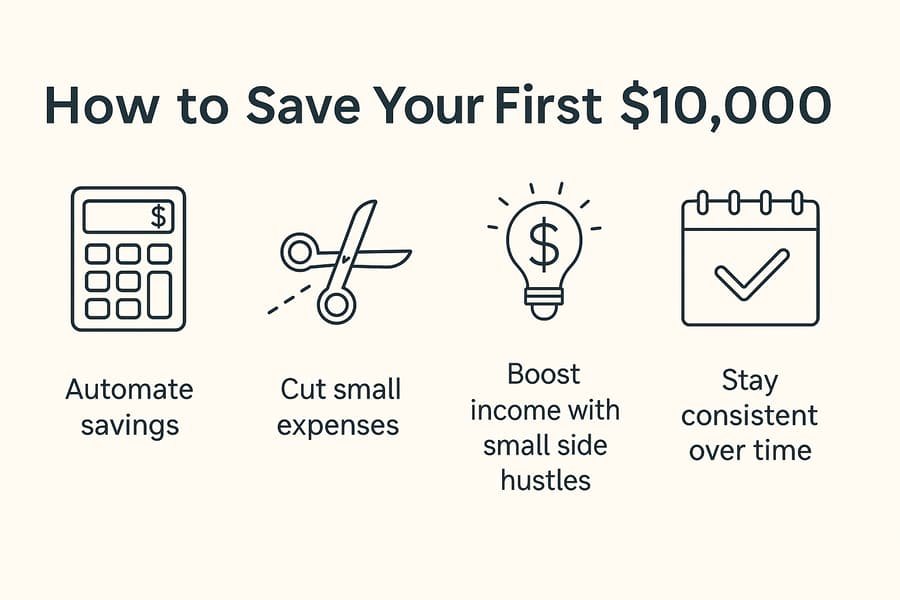
The problem is most people never get there because they approach saving the wrong way. They either try to slash their expenses so aggressively that it becomes unsustainable, or they wait for some mythical future when they are making enough to start saving. Neither works. What works is building systems that run in the background while you live your life.
That is exactly what finally worked for me. I stopped trying to save whatever was left at the end of the month. The truth was there was never anything left. Instead, I flipped the script and started paying myself first.
Related: 8 Money Habits I Wish I Learned in My Early 20s
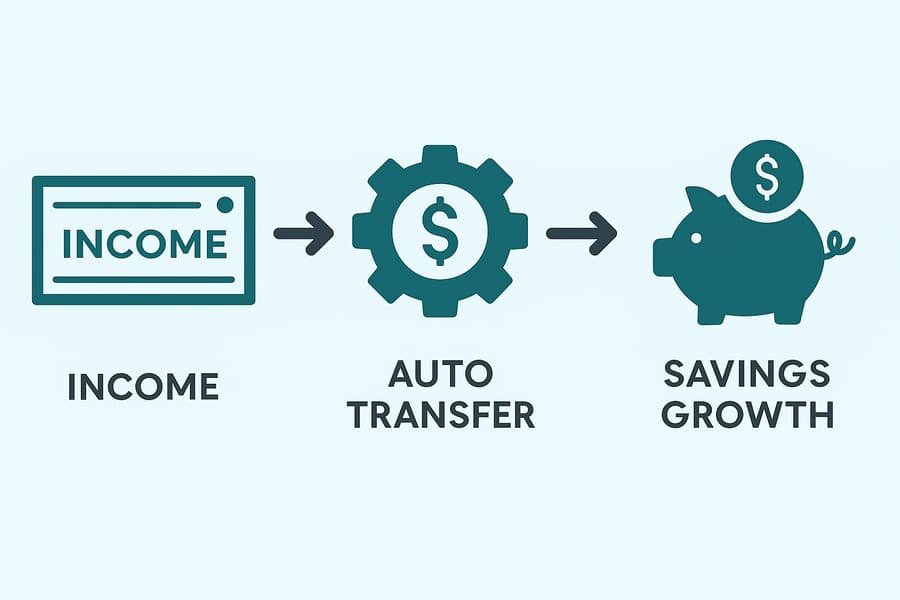
Every time I got paid, I set up an automatic transfer to my savings account. In the beginning, it was small. Twenty dollars. Fifty dollars. It didn’t feel like much, but it was consistent. The best part was I never had to think about it. It happened automatically, before I even had the chance to spend that money.
The beauty of automation is that it removes willpower from the equation. You don’t have to remember to transfer money, you don’t have to debate whether you can afford to save this month, it just happens.
And once the habit was in place, it became surprisingly easy to increase the amount over time. When I got a small raise or picked up extra income, I would bump up my automated transfer by a little bit. I barely noticed the difference in my spending, but my savings kept growing behind the scenes.
Break Big Goals Into Small, Achievable Wins
Another big mindset shift for me was breaking down the big goal into smaller, more manageable chunks. Ten thousand dollars sounds huge when you look at it as one number. But when you break it down into smaller targets, it feels doable.
For example, if you can save $200 per month, you are already at $2,400 after one year. Keep that pace for just over four years, and you have hit your goal. If you are able to increase your savings over time, you will hit it even faster.
And if you look at it in terms of daily savings, saving ten dollars a day puts you at $3,650 per year. That’s more than a third of the way to your ten thousand goal in just one year, with what feels like a small daily habit.
When I broke it down like that, the goal stopped feeling overwhelming. It became something I could actually visualize and track. Each month I hit my mini-target, it motivated me to keep going.
Find Your First Extra Dollars
Now, let’s talk about where that extra money actually comes from. You don’t have to turn your entire life upside down or deprive yourself of everything you enjoy. But you do need to get intentional.
The first place I started was cutting out the obvious stuff. Subscriptions I didn’t use, random memberships I forgot about, streaming services I barely watched, reviewing my bank statements was eye-opening.
Related: 10 Money-Saving Tips for Young Professionals
Eliminating those recurring charges gave me a quick savings boost without feeling like I was sacrificing anything meaningful. I wasn’t cutting joy out of my life, I was cutting waste.
Next, I took a hard look at my default spending. These are the purchases you don’t even think about: takeout, impulse Amazon orders, coffee runs, small daily conveniences that quietly add up. I didn’t eliminate everything, but I made intentional choices. Even cutting back by twenty or thirty dollars per week added up to meaningful savings over time.
Boost Your Income Without Burning Out
One thing that made a massive difference for me was finding simple ways to boost my income on the side. I am not talking about starting a full-blown side hustle or working eighty-hour weeks. I found small, manageable ways to bring in a little extra money here and there.
I sold things I no longer used. I did a few freelance gigs. I flipped a couple of items online. I even picked up a few one-time projects through friends and connections. None of these made me rich, but every few hundred dollars I earned helped me hit my early savings milestones faster.
Sometimes that first $1,000 is the hardest. But once you build momentum, the next thousand comes a little easier. And as your savings grow, your confidence grows with it.
Guard Yourself Against Lifestyle Creep
One of the biggest traps people fall into during this process is lifestyle creep. This is when your expenses quietly rise as your income increases. You get a raise and immediately upgrade everything: new apartment, new car, your wardrobe, your daily habits.
Before you know it, you are making more money but still living paycheck to paycheck.
I knew I had to avoid this trap if I was serious about hitting my savings goals. Every time my income went up, I made sure my savings rate increased too. If I got a two-hundred-dollar raise, I would increase my automatic savings by at least one hundred dollars. That way, my savings were always growing in line with my income.
This allowed me to maintain my lifestyle while still making real progress toward my ten thousand dollar goal.
Let Time and Consistency Work for You
Another huge piece of the puzzle is time. A lot of people underestimate how powerful time can be when it comes to building savings. You don’t have to save massive amounts each month. You just need to start, stay consistent, and let time do some of the heavy lifting.
Even a small amount in a high-yield savings account can earn a bit of interest, giving you a little boost along the way. But more importantly, time gives your habits a chance to compound. The longer you stay consistent, the more your savings will grow.
Celebrate the Small Wins
I also learned to celebrate small wins along the way. Saving ten thousand dollars does not happen overnight, and if you only focus on the end number, it can feel discouraging. That’s why I celebrated hitting my first $500, then my first $1,000, and so on.
Each milestone gave me a small sense of accomplishment and made me want to keep going. It helped me stay motivated even during months when progress felt slow.
Saving ten thousand dollars is not about being perfect. It’s about building momentum, staying consistent, and forgiving yourself when you slip up. There were months when I didn’t hit my savings target. Life happens, the key is to adjust, not quit.
Your First $10,000 Is Just the Beginning
When you finally see that $10,000 sitting in your savings account, it’s more than just a financial milestone. It’s proof that you can take control of your money. It’s confidence that you can handle life’s curveballs without falling apart, and it’s a foundation that allows you to start focusing on bigger financial goals like investing, buying a home, or starting your own business.
If you feel like you will never get there, trust me, you can. It starts with one decision. Then one small action, then another. Stack enough of those, and before you know it, your first ten thousand dollars will no longer feel impossible, it will feel inevitable, and once you hit it, you will never look at money the same way again.
Want more simple, real-world money advice?
Join the Cash Clarity Finance newsletter and get clear, actionable tips to help you build your financial future.