

The most underrated financial strategy isn’t some complex system you need a finance degree to understand. It’s actually the opposite, and I learned this the hard way.
I used to think I wasn’t “smart enough” for money.
You know the feeling? You’re scrolling through finance Twitter, and some guy with “10X Your Wealth” in his bio is breaking down his 47-point investment strategy involving crypto arbitrage, international tax optimization, and something called “synthetic covered calls.” Meanwhile, you’re just trying to figure out if you can afford both groceries and saving this month.
Here’s what nobody tells you: that guy is probably broke too. Or if he’s not, his strategy is so complicated that one wrong move and he’s back to square one.
At one point, I had four different budgeting apps on my phone, four. They were all supposedly helping me optimize my finances, but really they were just fighting each other for my attention. One told me I was overspending, another said I was on track, a third sent me notifications about opportunities to save that felt more like judgment than help.
And I was still broke.
Not because I wasn’t trying, not because I wasn’t smart enough. But because I was drowning in complexity that was sold to me as sophistication.
The Problem: The 12-Step Wealth System That Kept Me Broke
When I first started trying to “get good” with money, I did what everyone does. I consumed everything. Podcasts during my commute. YouTube videos before bed. Those Instagram carousel posts with way too many slides that promise to change your financial life if you just swipe through all 47 of them.
Every guru had their system. The path to financial freedom, the secret to passive income, and I bought into all of it.
I tried the side hustles. At one point, I was juggling freelance writing, selling stuff on eBay, and attempting to build a dropshipping store. The gurus said you needed multiple income streams for financial freedom, so I was determined to have them. Never mind that each stream required hours of setup, constant maintenance, and generated maybe $50 a month if I was lucky.
I had those four budgeting apps all running at once because each one promised to be the best for different things. One for tracking expenses, one for investment insights, one for bill reminders, one because it had a cool interface and made me feel like I had my shit together.
I opened investment accounts on three different platforms because one had better fees for ETFs, another was “optimal” for individual stocks, and the third had some special feature I can’t even remember now. I was literally listening to earnings calls for companies where I owned two shares. TWO SHARES.
The gurus promised passive income. They promised financial freedom. They promised that if I just followed their system, their very specific, very complicated, 12-step system, I’d be on my way to early retirement.
And you know what happened? I was still broke. Actually, I was MORE broke because I was paying for all these subscriptions to “optimize” my money. More stressed because I was spending every evening managing my empire of side hustles and investment accounts. More confused because all the apps and strategies were giving me conflicting advice.
The breaking point came when I sat down and actually calculated the hours I’d spent versus the money I’d made. My “multiple income streams” had generated about $200 that month. I’d spent roughly 60 hours building and maintaining them. That’s $3.33 an hour. I would have made more working a single shift at McDonald’s.
My complicated investment portfolio? After a year of advanced strategies, it had underperformed a basic S&P 500 index fund. All those hours researching stocks, reading analyst reports, timing the market… for worse returns than if I’d just bought the boring index fund and never looked at it again.
I was doing everything right according to the gurus, following all the systems, hustling on nights and weekends, optimizing every dollar, and getting absolutely nowhere.

The Turning Point: What Warren Buffett Knows (That Your Favorite FinTok Influencer Doesn’t)
The shift came from something I’d known for years but had never actually absorbed.
Warren Buffett, literally one of the richest people on Earth, has the most boring investment strategy you’ve ever heard. He buys good companies, he holds them, that’s it.
No daily trading. No crypto moonshots. No complex options strategies that require a PhD to understand. He’s famously said that when he dies, his wife’s inheritance should go into a simple S&P 500 index fund. The man could set up the most sophisticated financial instrument known to humanity, and he’s like “nah, just buy the index fund.”
When this finally clicked for me, I felt two things at once. Relief, because it meant I wasn’t failing at some complex game I didn’t understand. But also anger, because I’d wasted so much time and energy on complicated strategies when the answer was right there the whole time.
If one of the greatest investors alive keeps it this simple, what was I doing listening to some 23-year-old on YouTube explain his proprietary trading system?
And this principle wasn’t just about investing. The more I looked, the more I saw it everywhere.
Saving? The people who were actually building wealth weren’t using sophisticated strategies. They were just automating a percentage of their income before they could spend it. Done.
Budgeting? The ones who stuck with it weren’t tracking 47 categories across multiple apps. They were watching their big expenses like housing, food, and transportation. The rest mostly sorted itself out.
Debt payoff? No complicated debt avalanche versus snowball calculators. Just pick the one that makes sense for you (smallest balance or highest interest) and attack it, then move to the next one.
But here’s the thing. Simple doesn’t sell courses. Simple doesn’t get you a million followers. Simple doesn’t make you feel like you’re part of an exclusive club of people who figured it out.
So instead, we get sold complexity. We get sold the idea that if we’re not optimizing every single decision, leveraging every opportunity, and hustling ourselves into exhaustion, we’re somehow doing it wrong.
Why We’re Sold Complexity (And Who Benefits From Your Confusion)
Let me be honest about something that took me way too long to figure out. The financial industry doesn’t want you to know how simple this can be.
Think about it. If you knew that you could invest in one or two low-cost index funds and beat most professional investors, who’s going to pay for the robo-advisor that charges you fees to do basically the same thing? If you realized you could automate your savings once and never think about it again, who’s going to subscribe to that premium budgeting app with 47 features you’ll never use? (Don’t get me wrong, some apps are genuinely helpful, but you don’t need the complicated premium versions to win.) If you figured out that cutting expenses comes down to watching three categories instead of thirty, who’s buying the $2,000 “financial freedom” masterclass?
The whole personal finance industrial complex makes money from your confusion, from your fear, from convincing you that money is too complicated for regular people to figure out on their own.
And look, I get why this works especially well on millennials and Gen Z. We’re already drowning. We’re the generations dealing with student loans that cost more than our parents’ first house, a job market that wants five years of experience for entry-level positions, and rent that eats half our paycheck before we even think about saving. Everything in our financial lives is already complicated and stacked against us.
So when someone shows up with a 12-step wealth system, part of us thinks “well, everything else in life is complicated, so building wealth probably should be too.” It almost feels wrong that it could be simple, like we’re missing something or there must be some catch we’re not seeing.
But the catch isn’t that simple doesn’t work, the catch is that simple doesn’t make anyone else money except you.
Course creators need you to believe their system is special. App developers need you to think you can’t track money without their premium features. Financial advisors need you to feel like investing is too risky to do alone. They’re not necessarily bad people, but their business model depends on you staying confused and dependent.
The truth is uncomfortable but freeing once you accept it. Most of the financial advice industry isn’t designed to make you wealthy. It’s designed to make money off your desire to become wealthy. There’s a difference.
What Simple Actually Looks Like (And Why It Works)
Here’s my actual financial strategy now:
I automate 20% of my income to savings and investments before I see it. I invest in index funds, total stock market and some international exposure. I track three big expenses: housing, food, and transportation. Everything else falls into one category. When I have extra income from my side business, it goes straight to investments. That’s it. That’s the whole system.
No spreadsheets with 47 categories. No daily portfolio checks. No complicated tax optimization strategies that require a CPA to explain. Just simple, repeatable actions.
And it works because I focus on action. Not planning, not optimizing, not researching the perfect strategy. Action on what actually matters. Action on the big expenses that move the needle. Action on making extra money when I can. Action on investing it consistently instead of letting it sit in checking.
The beauty of simple is that it’s sustainable. I don’t have to think about my finances every single day. I don’t have to maintain some complex system that falls apart the moment life gets busy. The system runs itself, and I can focus my energy on actually earning more or enjoying my life instead of managing money.
Simple is also flexible. When something changes in my life, and it always does, I don’t have to rebuild an entire house of cards. I just adjust one or two things. If I’m earning more money, I increase the automation percentage. If there’s an unexpected expense, I know exactly where I stand because I’m only tracking what matters.
And here’s what mainstream personal finance gets wrong. They want to sell you a system, one perfect system that works for everyone. But the best system is the one that fits your life, your goals, your actual situation right now. And the simpler it is, the easier it is to make it yours.
Maybe you’re drowning in high-interest debt right now. Your simple system might be: every extra dollar goes to debt until it’s gone. That’s it. No investing yet, no complicated debt payoff calculators, just attack the debt.
Maybe you can’t save 20% yet, fine. Your simple system is: 5% auto-transfer on payday, then when you get more comfortable or earn more, bump it to 10%. The point isn’t the percentage, it’s the habit.
Maybe you want to focus on earning more instead of cutting expenses, cool. Your simple system is: find one way to make extra money, invest that income, keep your day job expenses stable.
The system doesn’t matter as much as you think. What matters is that it’s simple enough that you’ll actually stick with it. Because consistency beats optimization every single time.
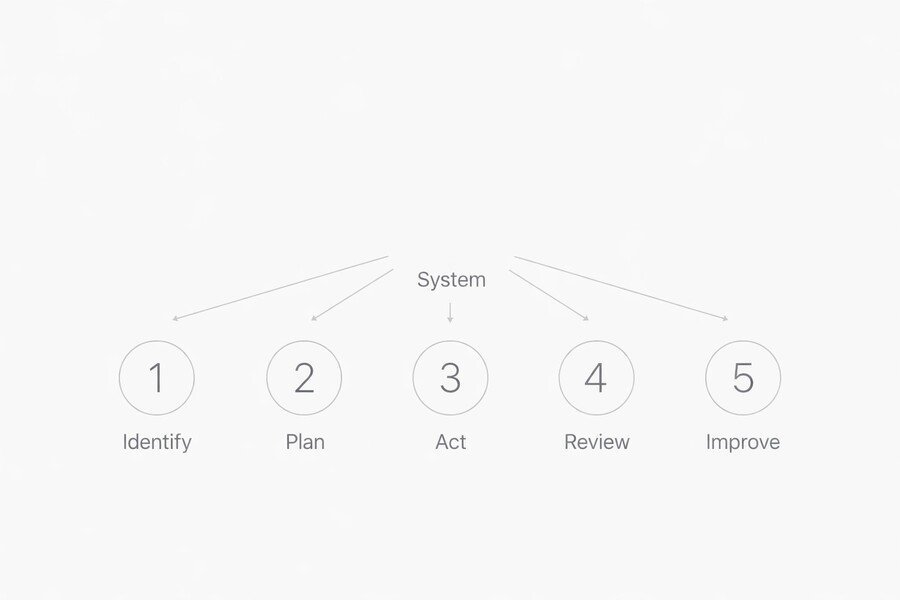
The Permission You’ve Been Waiting For
You don’t need a complicated strategy to build wealth. You don’t need to understand options trading, crypto mining, or tax-loss harvesting. You don’t need seven income streams, twelve investment accounts, or a budget with 47 categories.
You just need to spend less than you earn, invest the difference in something that grows, and do that for a long time. That’s it. That’s the whole game.
I know it feels like it shouldn’t be this simple, like there must be some secret you’re missing. But I’ve been on both sides now. I’ve tried the complicated way and the simple way. And I’m telling you, simple wins. Not because it’s flashy or makes you feel sophisticated, but because it actually works.
If you want more straight talk about money without the guru BS, I send out a weekly newsletter where I break down one financial concept or strategy that actually matters. No fluff, no 12-step systems, just practical stuff you can use. You can subscribe below if that sounds useful.
What’s one complicated financial thing you’re doing right now that you could simplify this week? Drop it in the comments. I want to hear what you’re working on.
If you found this helpful, you might also like:
- Why Your Money Mindset Matters More Than Your Salary
- ETFs vs Index Funds: What’s the Difference and Which One is Better for Beginners?