
Trying to figure out how to invest in your 20s can feel like stepping into a world you were never taught to navigate. One minute you’re trying to keep up with rent, side gigs, and your social life, and the next, people are telling you to max out your retirement account (like a Roth IRA if you’re in the U.S.) and think about retirement like it’s tomorrow. It’s confusing, it’s intimidating, and let’s be honest, it’s really easy to put off.
But here’s the truth most people don’t hear early enough: you don’t need a six-figure salary to start investing. You don’t need to be “good with money,” and you definitely don’t need to wait until you’ve got everything figured out.
In fact, your 20s are the best time to start, even if you’re just working with $20, $50, or $100 a month. Time is on your side right now, and that’s something money can’t buy later.
Starting small is better than waiting for the perfect moment, because that moment rarely comes. What matters most isn’t how much you invest, it’s how early and how consistently you start.
This post isn’t going to throw a bunch of financial jargon at you. It’s not for trust fund kids or stock market bros. It’s for real people like you, figuring it out step by step and wanting to build something for your future without giving up your present.
So if you’ve been wondering where to start or if you’re already low-key panicking that you’re behind, take a deep breath, you’re in the right place. Let’s talk about how to start investing in your 20s in a way that’s simple, doable, and built for real life.
Why Investing in Your 20s Matters
If there’s one thing that makes the biggest difference in building long-term wealth, it’s not how much you make, it’s when you start. Investing in your 20s gives you the one advantage no amount of money can buy later: time.
Let’s say you invest $200 a month starting at age 22. Assuming an average 7% return, by the time you’re 65, you’ll have around $600,000. If you wait just 10 years and start at 32 instead, you’ll only have about $290,000, even if you invest the same amount each month.
That’s the power of compound growth. Your money earns money, and then that new money earns more. It builds on itself, year after year. The earlier you start, the more time your investments have to grow. That’s why your 20s are golden.
But it’s not just about math. Starting in your 20s helps you build habits early. You’re training yourself to think long-term, to pay yourself first, and to stop living paycheck to paycheck. You’re setting up systems now that will support you through your 30s, 40s, and beyond.
Even if it feels like you’re only investing pocket change, those early contributions are doing more heavy lifting than you think. Starting small now can beat starting big later.
You also have more room to take risks in your 20s. With decades ahead of you, short-term market dips won’t hit as hard. That means you can ride out volatility and potentially earn more over time, something someone in their 50s can’t always afford to do.
Plus, the earlier you start, the more you’ll learn. Every dollar invested is experience gained. You’ll become more confident, more informed, and better equipped to make smart decisions as your income grows.
The truth is, most people wait too long. They tell themselves they’ll start when they make more money but if you make investing a habit now, even with small amounts, you’re already ahead of the game. So don’t worry about doing it perfectly, just focus on getting started.
If you’re still working on the basics, check out my guide on how to build a beginner budget or my post on why you keep getting stuck with money for a mindset reset. Both can help you get a clearer picture of where your money’s going before you start investing.

Build Your Financial Foundation Before You Invest
Before you put your money into the market take a minute to zoom out. Investing is important but it’s not step one. To invest with confidence and stay consistent, you need a solid financial base that supports you.
Start with an Emergency Fund
Before you grow your wealth, protect it. An emergency fund is your financial buffer. It keeps you from dipping into your investments every time life throws a curveball.
How much do you need? Aim for at least $500 to $1,000 to start. That’s enough to cover most small emergencies like a car repair, a medical bill, or unexpected travel. Once you’re more stable, try building up to three to six months of expenses.
Keep your emergency fund in a high-yield savings account so it’s safe, easy to access, and still earning a little interest.
For help getting started, check out my post on how to build a $1,000 emergency fund.
Pay Off High-Interest Debt
Credit cards and other high-interest debt can quietly crush your progress. If you’re paying 18–25% interest on a balance, it’s hard for investments to keep up. Focus on eliminating debt with double-digit interest rates before going all in on investing.
You don’t have to be totally debt-free to start investing, but the high-interest stuff? That’s the priority.
Want a refresher? My post on Credit Cards 101 breaks it down in plain english.
Make Room in Your Budget
You don’t need to be a budgeting wizard to start investing, but you do need to know where your money’s going. Look at your income and expenses honestly. How much can you consistently set aside?
Even $25 or $50 a month is enough to get started. What matters most is building the habit.
You can also review your monthly spending for small trade-offs. Could you eat out two fewer times this month and invest that $40? Little shifts like that are how long-term progress is made.
And if you’re saving for your first $10,000, don’t miss my post on how to save your first $10K.
You Don’t Have to Be Perfect, Just Ready Enough
There’s no such thing as the perfect time to start investing. You’ll always have bills, goals, or something else competing for your attention.
The goal isn’t to have your finances 100% perfect. It’s to feel stable enough that investing won’t stress you out. If you’ve got a starter emergency fund, a handle on your debt, and room in your budget, you’re ready.
And the rest? You’ll learn as you go.
How to Invest in Your 20s: Beginner-Friendly Options
Once your financial base is in place, it’s time to talk about where to actually invest your money. This part doesn’t have to be complicated or overwhelming. You don’t need to be a stock-picking genius to get started. In fact, the best strategies for beginners are usually the simplest.
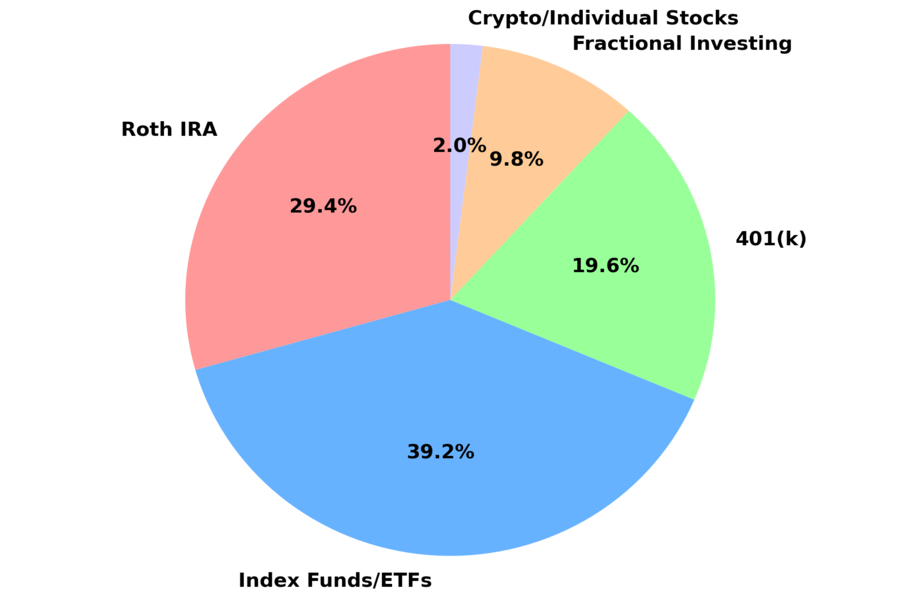
Here are four beginner-friendly options that can help you start building real wealth without stress.
1. Start With a Retirement Account (Like a Roth IRA or Your Country’s Equivalent)
If you’re in the U.S., a Roth IRA is one of the best ways to invest for the long term. You invest after-tax money, and your gains grow completely tax-free. That means you’ll never owe taxes on your profits if you follow the rules.
Other countries have similar options, such as the TFSA in Canada or the ISA in the U.K. The key idea is the same: these accounts give your investments tax advantages that help your money grow faster.
You can open one through a trusted platform like Vanguard, Fidelity, or Schwab, and invest in simple options like index funds.
2. Invest in Index Funds or ETFs
Index funds are like a bundle of stocks you buy all at once. Instead of betting on one company, you’re spreading your investment across hundreds. It’s low-cost, low-effort, and backed by decades of solid returns.
For example:
- A total stock market index fund gives you exposure to the entire U.S. market.
- An S&P 500 ETF invests in the top 500 companies in the U.S.
- A global ETF can give you international exposure.
These are great options if you want to set it and forget it.
3. Use a Workplace Retirement Plan (Like a 401(k), If You Have One)
If your employer offers a retirement plan, especially one with matching contributions, take it. That match is free money. Even if you’re not sure how to invest within the account, contributing enough to get the match is a no-brainer.
Once you’re in, you can usually choose from target-date funds or index funds. Target-date funds are especially beginner-friendly because they adjust automatically as you get older.
4. Try Fractional Investing Platforms
If you’re starting with a small amount of money, no worries. Apps like Fidelity, Public, or M1 Finance let you buy fractional shares of stocks and ETFs. That means you can start with $5 or $10 and still own a piece of big-name companies or funds.
This makes investing feel way more accessible, especially if you’re on a tight budget but want to build the habit.
Bonus: A Quick Word on Crypto and Individual Stocks
You might be tempted to throw money into crypto or hot stocks trending on social media. If you want to explore these, treat them like spice not the whole meal.
Keep them to no more than 5% of your portfolio. They’re high risk and volatile, and not where you want your core investments.
Before diving in, make sure you’ve got a solid foundation with traditional investments. Crypto can be part of your portfolio, but only if you fully understand the risks and it should never replace long-term strategies like index funds or retirement accounts.
You don’t need to master all of these options right away. The goal is to start with one or two that feel right for you. Keep it simple, consistent, and focused on the long term.
Still comparing your options? Check out my post on best budgeting apps for beginners to find tools that help you track your investments and manage spending in one place.
Beginner Investing Strategies That Work
Now that you know where to invest, let’s talk about how to invest. You don’t need a complicated strategy, just one that’s consistent, low-stress, and designed to grow over time.
Dollar-Cost Averaging
Instead of trying to time the market, dollar-cost averaging means you invest the same amount on a regular schedule like $100 every month. This smooths out your entry points and helps reduce the emotional rollercoaster of buying high or selling low.
It also makes investing feel automatic. You don’t have to think about whether it’s the right time, you just invest on schedule and keep it moving.
Automate It
One of the best things you can do is automate your contributions. Set up auto-transfers to your investment account on payday. This turns investing into a habit that happens behind the scenes.
When you automate it, you remove the temptation to skip a month or wait for the market to look better, it keeps you disciplined without relying on motivation.
Focus on the Long Game
Investing isn’t a get-rich-quick move, it’s a long game. Your goal is to build wealth slowly and steadily, not chase overnight gains.
So don’t get distracted by headlines or hype. Stay consistent and stick to your plan, your future self will thank you for it.
Common Investing Mistakes to Avoid
Even smart people can make investing mistakes especially when emotions and money mix. Here are some of the most common missteps to watch out for, so you can stay on track.
Waiting for the Perfect Time
Spoiler alert: it doesn’t exist. Waiting until the market dips, until you make more money, or until you “feel ready” often leads to never starting at all.
The best time to invest was yesterday, the second-best time is today. You can always adjust later, but you can’t make up for lost time.
Trying to Time the Market
Trying to guess the best days to buy or sell is a losing game even for the pros. The market goes up, it goes down, and no one can predict exactly when.
Instead of trying to time the highs and lows, focus on time in the market. The longer your money is invested, the more chances it has to grow.
Going All-In on Risky Bets
Crypto, meme stocks, or hot stock tips from a friend can feel exciting but building your core portfolio around high-risk moves is dangerous.
If you want to experiment, do it with a small slice of your portfolio, no more than 5%. The rest should stay in stable, diversified investments.
Letting Emotions Take Over
It’s easy to panic during a market drop or feel FOMO during a surge, but reacting emotionally often leads to buying high and selling low.
Having a plan and sticking to it helps you stay calm and confident when the market gets loud.
Thinking You Need a Lot of Money to Start
You really don’t. Small, consistent contributions matter more than big, inconsistent ones. Start with what you can, build the habit and grow from there.
Want to avoid these mistakes and stay focused? Read my post on money mindset to build the kind of calm, confident approach that actually lasts.
Balancing Investing with Life in Your 20s
Let’s be real, you’re not just trying to invest in index funds. You’re also trying to enjoy your 20s, maybe that means traveling a bit, moving to a new city, grabbing dinner with friends, or building your dream career. Investing shouldn’t feel like it’s stealing all the joy out of life.
Good news: it doesn’t have to, you can do both.
Set Boundaries, Not Restrictions
Investing isn’t about cutting out everything fun, it’s about being intentional. You can still enjoy your life, just with a plan. That might mean choosing a budget for eating out, prioritizing one trip instead of five, or delaying a big purchase for a few months.
The goal is freedom, not deprivation.
Use Lifestyle Inflation Wisely
As your income grows, it’s tempting to upgrade everything, your apartment, your car, your wardrobe. That’s called lifestyle inflation or lifestyle creep, and it can quietly kill your financial momentum.
Instead, try this: whenever you get a raise or windfall, increase your investing and savings rate before adjusting your lifestyle, it’s one of the fastest ways to build wealth without feeling the pinch.
Your Money Should Reflect Your Values
You don’t need to invest every spare dollar. You’re allowed to spend on things that matter to you. If travel lights you up or you value supporting small businesses, make space for that in your budget.
Just know where your money is going, and make sure it aligns with what actually makes you happy not what social media says you should want.
Finding the balance is what makes this whole thing sustainable. You’re building wealth, yes, but you’re also building a life.

Your 30-Day Action Plan to Start Investing
Feeling inspired is great but action is what actually builds results. Here’s a simple 30-day plan to get your investing journey off the ground, whether you’re starting from zero or already saving.
Week 1: Get Clear on Where You Stand
- Review your monthly income and spending.
- Build a mini emergency fund (aim for $500 to $1,000).
- Make a list of debts and note any with high interest.
- Read my post on How to Build a Beginner Budget Even If You Hate Numbers.
Week 2: Learn and Choose Your First Investment
- Read or watch beginner investing content you trust.
- Open an account with a platform like Fidelity or Vanguard.
- Decide whether you’ll start with an index fund, ETF, or retirement account.
Week 3: Make Your First Move
- Invest a small amount as little as $25 or $50.
- Set up auto-transfers to make your investing consistent.
- Track how it feels, this is your first real step.
Week 4: Build the Habit
- Automate your contributions based on your budget.
- Revisit your goals, why are you investing?
- Celebrate your progress. You’re no longer waiting, you’re doing.
It’s not about being perfect. It’s about starting and sticking with it.
Looking for an extra nudge? You might like my guide on the 8 Money Habits I Wish I Learned in My Early 20s.
What to Do Next
You don’t need to be a financial expert. You don’t need to have it all figured out, and you definitely don’t need a ton of money to start, you just need to begin.
Investing in your 20s isn’t about getting rich overnight, it’s about building a future that feels free, stable, and fully yours. When you invest, you’re not just growing your money. You’re choosing to believe in your future self.
Start small, stay consistent and learn as you go. And if you ever feel stuck, come back to the basics, your goals, your values, your plan.
Thanks for reading. If this post helped you feel a little more confident about investing, consider sharing it with a friend who needs to it too.
And if you want more simple, real-world money tips like this, make sure you’re signed up for the Cash Clarity Finance newsletter.