
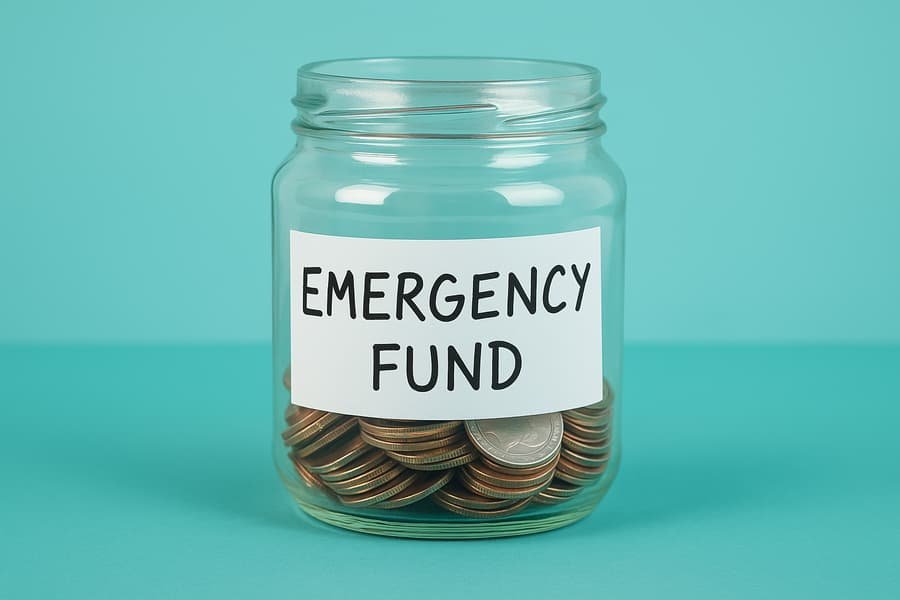
Let’s be honest. Emergencies don’t wait until you’re financially ready. Your car won’t ask how your checking account looks before it breaks down. A surprise dental bill, last-minute trip home, or job hiccup can happen fast. And for many, those moments can completely derail everything.
I remember the sick feeling in my stomach when my laptop died during finals week in college. Not only did I need it for school, but it was also how I made money doing freelance work. I had exactly $47 in my checking account, and suddenly I was facing a $300 repair bill that felt like $3,000. That’s when it hit me, this wasn’t just about the laptop. It was about how powerless I felt when life threw me a curveball.
How I Changed My Mind About Emergency Funds
When I first heard the term emergency fund, I thought it was something for people who already had their finances together. You know, those people who seemed to have everything figured out while I was barely covering rent and groceries. How was I supposed to stash away extra money for something that might happen? But that mindset kept me stuck in stress mode, living paycheck to paycheck and constantly worried about what would break next.
What changed everything for me was realizing this: you don’t need to be rich, or even stable, to start. You just need a plan, a little consistency, and a clear reason why. The truth is, an emergency fund isn’t about having extra money, it’s about buying yourself peace of mind and options when life gets messy. And trust me, life will get messy.
The $1,000 emergency fund isn’t some magic number pulled out of thin air. It’s specifically designed to handle about 80% of the financial emergencies most people face. Will it cover six months of rent if you lose your job? No. But it will handle that car repair, urgent dental work, or replace your phone when it takes a swim in the toilet. More importantly, it breaks the cycle of putting emergencies on credit cards and then spending months paying them off with interest.
Why This One Fund Changes Everything
An emergency fund is your first real step toward financial freedom. It’s not just about having money in a separate account, it’s about sleeping better at night, knowing one unexpected bill won’t throw your whole life off track. And it’s one of the most empowering financial moves you can make, especially if you’ve felt like money is always tight.
But here’s what nobody tells you about emergency funds: they’re as much about psychology as they are about money. Before I had mine, every phone call from an unknown number made my heart race. Was it the mechanic with bad news? A medical bill I forgot about? When you’re living without a safety net, everything feels like a potential catastrophe.
I’ll never forget the first time I used my emergency fund. My washing machine started making this awful grinding noise, and instead of panicking or trying to ignore it (because who has money for appliance repairs?), I actually felt calm. I had options. I could call a repair guy without calculating whether I’d be able to eat that week. That’s when it clicked, this wasn’t just about the $1,000. It was about buying back my sense of control.
The ripple effects are bigger than you might expect. When you’re not constantly worried about the next financial crisis, you start making better decisions overall. You’re not as tempted to put things on credit cards “just in case.” You stop avoiding necessary expenses (like that dental cleaning) because you’re not terrified of what might come up afterward. You actually start planning instead of just surviving.
Here’s something else that surprised me: having an emergency fund made me feel more generous, not less. When you’re not operating from a place of scarcity and fear, it’s easier to help a friend in need or contribute to causes you care about. Financial security, even a small amount, changes how you show up in the world.
In this post, I’ll walk you through exactly how to build your first $1,000 emergency fund, step-by-step. Whether you’re starting with $5 or $50, whether you’re dealing with student loans, supporting a family, or just trying to make ends meet, there’s a path forward that works for your situation.
1. What Is an Emergency Fund (and Why You Need One)?
An emergency fund is money set aside for real-life surprises. Not vacations. Not new shoes. We’re talking actual emergencies:
- Medical bills. That urgent care visit when you’re pretty sure you have strep throat.
- Car repairs. Your transmission decides to give up on the highway.
- Unexpected travel. Flying home because a family member is in the hospital.
- Job loss or reduced hours. Your company “restructures” and suddenly you’re looking for work.
- Home repairs. Your water heater floods the basement at 2 AM.
Here’s the thing about emergencies: they have terrible timing. They show up when you’ve already stretched your budget thin, right after you’ve paid all your bills, or during the holidays when money’s already tight.
Having even $500 to $1,000 in a separate account gives you breathing room. It helps you avoid going into credit card debt or that awkward conversation where you have to borrow money from friends or family.
I learned this the hard way when I got a call that my mother was in the hospital and I needed to fly home immediately. Between the last-minute flight, hotel, and time off work, I had to put everything on credit cards and spent the next two years paying it off. The financial stress lasted way longer than the actual emergency.
This isn’t about fear, it’s about freedom. When you have a cushion, you make decisions from a place of clarity, not panic. You can actually shop around for the best repair quote instead of desperately accepting the first one you find.
2. How Much Should You Save First?
If you Google this, you’ll hear 3–6 months of expenses. That’s a great long-term goal. But let’s start simple:
- First goal: $500
- Stretch goal: $1,000
Here’s the reality check: if you’re living paycheck to paycheck, telling someone to save three months of expenses feels impossible. But $500? That’s easy.
The $1,000 target isn’t random. Studies show that about 80% of financial emergencies fall under $1,000. My car needed new brakes: $350. Emergency dental work: $420. These weren’t life-altering events, but without that cushion, each one would have meant choosing between paying rent or eating that week.
Here’s the global reality: 45% of adults in developing economies worldwide can’t reliably access emergency money within 30 days, while nearly 40% of Americans aren’t prepared to handle a $400 emergency expense, and almost a third have no emergency savings. So if you hit $500, you’re already ahead of most people globally. At $1,000, you’re in genuinely good shape for handling day-to-day financial surprises.
The beauty of starting small is that you build momentum. Every time you successfully handle an emergency without going into debt, you prove to yourself that you can do this. And once you hit $1,000, you can shift your focus to paying off debt, investing, or saving for something you actually want.
3. How to Build It Fast (Even If You’re Broke)
Saving money doesn’t mean you need to skip every coffee or stop living. It means making intentional choices. Here are practical ways to get started:
Start with the foundation:
- Open a dedicated savings account. Name it something motivating like “Peace of Mind Fund” or “Freedom Fund”.
- Set up automatic transfers. Even $10 a week adds up to $520 in a year.
Find money you already have:
- Cut one thing temporarily. Pause a subscription you barely use or skip one takeout meal per week.
- Use windfalls. Tax refunds, birthday money, cash back from apps, that $20 you found in your coat pocket.
- Sell unused stuff. Old tech, clothes, books gathering dust. Use that money to seed your fund.
Create new income streams:
- Take on a mini side hustle. Pet-sitting, freelancing, tutoring, or driving for Uber or Lyft on weekends.
Here’s what I did when I was completely broke: I started with $5 a week. I know that sounds ridiculously small, but it was what I could manage without eating ramen for every meal. That $5 became $20 a month, then $260 in a year. More importantly, it proved to me that I could actually stick to saving money.
The key is to start with an amount that doesn’t make you panic. If $10 a week feels too scary, try $5. If $5 feels impossible, start with $2. The amount doesn’t matter as much as building the habit. You can always increase it later when your situation improves.
One thing that helped me was treating my emergency fund like a bill. Just like I had to pay rent and utilities, I had to pay my future self. It stopped feeling optional and started feeling necessary.
If you’re already budgeting, you’ll know exactly where this money can come from. If not, check out my post How to Build a Beginner Budget (Even If You Hate Numbers) for a simple breakdown.
4. Where to Keep Your Emergency Fund
You want it safe, slightly out of reach, but easy to access when you actually need it. Here’s what works:
The best option: High-yield savings account Look for accounts that offer competitive interest rates. Banks like Ally, Capital One, Marcus by Goldman Sachs, or online banks often offer the best rates. These accounts typically earn 4-5% interest (compared to 0.01% at traditional banks), so your money actually grows while it sits there.
What to avoid:
- Your checking account. You’ll spend it without thinking. Emergency funds need a little friction to prevent impulse use.
- Investment accounts. You need this money stable, not fluctuating with the market. Your emergency fund isn’t the place to chase returns.
- CDs or accounts with penalties. If you can’t access it quickly, it makes your emergency fund useless when you actually need it.
The key is finding the sweet spot, accessible enough that you can get it within a day or two when you truly need it, but separate enough that you won’t accidentally spend it on takeout or impulse purchases.
Some people keep their emergency fund at a completely different bank from their everyday accounts. This creates just enough of a barrier that you have to be intentional about using it, while still being able to transfer money when a real emergency hits.
5. Mistakes to Avoid
Here’s what not to do with your emergency fund:
Don’t use it for non-emergencies. Concert tickets, sales on clothes you “need,” or a weekend getaway don’t count as emergencies. I know it’s tempting when you see that balance sitting there, but resist. A good rule of thumb: if you can wait a week to buy it, it’s probably not an emergency.
Don’t forget to refill it after using it. This is the biggest mistake people make. You use $500 for car repairs, feel relieved that you had the money, and then… forget to build it back up. Set a reminder to start rebuilding immediately after you use it, even if it’s just $10 a week.
Don’t keep it in cash under your bed. I get the appeal of having physical cash available, but it’s not earning any interest, it’s not protected if something happens to your home, and let’s be honest, it’s way too easy to borrow $20 here and there until it’s gone.
Don’t wait until it’s “perfect” to start other goals. Your emergency fund doesn’t have to be complete before you start paying extra on debt or saving for something fun. Once you hit that initial $500-1,000, you can split your efforts. Maybe 70% goes to debt payments and 30% continues building your emergency fund.
Don’t beat yourself up for using it. This is a flexible fund. If you use $200 for a genuine emergency, there’s no shame in that, that’s literally what it’s for! The whole point is that you had options instead of going into debt. Just commit to building it back as soon as you can.
The biggest mindset shift is realizing that using your emergency fund isn’t a failure, it’s a success. It means the system worked exactly as intended.
6. How This One Fund Boosts Your Confidence
Saving $1,000 isn’t just about the money. It’s proof you can make a plan and stick to it. It builds trust with yourself.
I remember the exact moment I realized this. I was walking to my car after work and saw a parking ticket on my windshield. Instead of that familiar stomach drop and panic about how I’d pay for it, I just felt… annoyed. Not panicked, just annoyed like any normal person would be. That’s when it hit me: I wasn’t living in constant financial fear anymore.
The psychological changes are huge. You’ll worry less about your next paycheck because you know you have a buffer. You’ll feel more prepared when friends invite you out because one unexpected expense won’t derail your entire month. Most importantly, you’ll start seeing yourself as someone who’s actually good with money.
It changes how others see you too. When your friends are stressing about their car breaking down or their phone dying, you’ll be the calm one offering practical advice. You become the person people come to for financial guidance, not because you’re rich, but because you’re prepared.
You’ll take smarter risks. Want to negotiate for a raise? You can do it with confidence because losing your job isn’t an immediate catastrophe. Thinking about switching careers? You have breathing room to make thoughtful decisions instead of desperate ones.
The confidence compound effect is real. One successful financial goal makes the next one feel possible. Before you know it, you’re the person who has their finances together, and that identity shift changes everything about how you approach money.
This isn’t just about having $1,000 in the bank. It’s about proving to yourself that you can take control of your financial future.
Final Thoughts: Start Small, Stay Consistent
Your emergency fund doesn’t have to happen overnight. But it can happen sooner than you think.
Here’s the truth that took me years to understand: the hardest part isn’t saving the money, it’s making the decision to start. Once you open that account and make your first deposit, even if it’s just $5, something shifts. You’re no longer someone who should have an emergency fund. You’re someone who has one, and you’re just making it bigger.
Start with $10. Start with $1. Just start.
I’ve seen people stress for months about whether they should save $25 or $50 per month, meanwhile not saving anything at all. The perfect plan that you never start is worthless. The imperfect plan that you start today will change your life.
Some final motivation:
- Week 1: You’ll feel proud that you actually did something
- Month 1: You’ll be surprised how naturally it becomes part of your routine
- Month 3: You’ll start feeling more secure, even with just a small amount saved
- Month 6: You’ll wonder how you ever lived without this safety net
- Year 1: You’ll be the person giving emergency fund advice to your friends
Every dollar you save is one more layer of clarity and calm. You’re building financial freedom, one tiny deposit at a time.
Your future self, the one who sleeps better at night, who doesn’t panic at unexpected expenses, who feels in control of their money is waiting for you to take that first step. So what are you waiting for? Open that savings account today. Transfer $5. Name it something that makes you smile. You’ve got this.
Want more practical tips like this? Sign up for the newsletter and take the stress out of money for good.