

Living paycheck to paycheck can feel like you’re trapped on a treadmill that never stops. The bills keep coming, the balance in your checking account keeps dipping dangerously low, and the idea of actually saving money seems almost laughable. But here’s the truth: even when money is tight, small practical changes can create breathing room in your budget. You don’t need a massive salary increase or a financial miracle to start building a safety net.
This guide walks you through 17 practical ways to save money when you’re working with limited income. These aren’t theoretical strategies or tips that only work for people with comfortable budgets. These are practical adjustments that can actually work when every dollar already has a job.
Track Every Dollar Without Getting Obsessive
You can’t change what you don’t measure. That sounds simple, but most people living paycheck to paycheck avoid tracking their spending because they’re afraid of what they’ll find.
Start with just one week. Write down every single purchase, from your morning coffee to your streaming subscriptions. You don’t need fancy software or complicated spreadsheets. A notes app on your phone works perfectly fine.
The goal isn’t to judge yourself. It’s to spot the leaks. Most people discover they’re spending $50 to $150 monthly on things they barely remember buying. Those small transactions add up faster than you’d think.
Cut One Subscription This Month
Look at your bank statement from last month and highlight every recurring charge. Streaming services, app subscriptions, gym memberships you forgot about, subscription boxes that seemed like a good idea six months ago.
Pick one to cancel right now. Not eventually. Today.
If you’re paying for five streaming services, you probably watch two regularly. Cancel the others and rotate them back in when there’s a show you actually want to watch. Netflix will still exist in three months when you want to resubscribe.
That $10 monthly subscription you barely use becomes $120 annually. That’s money that could cover an unexpected car repair or start an emergency fund.
Stop Grocery Shopping Without a List
Walking into a grocery store without a plan is one of the fastest ways to overspend. Stores are designed to make you buy things you didn’t intend to purchase.
Before you shop, check what you already have at home. Plan three to five simple meals around those ingredients. Write down only what you need to complete those meals.
Stick to the list. Those end-cap displays and impulse buys near the checkout? They’re specifically placed to catch people who are shopping without a plan.
If you’re currently spending $600 monthly on groceries for two people, a consistent meal plan can easily cut that to $450 without eating ramen every night.
Buy Generic Brands for Staples
Brand loyalty costs money you might not have right now. For most staple items, the generic or store brand version is nearly identical to the name brand.
Start with the basics: rice, pasta, canned goods, frozen vegetables, cleaning supplies, over-the-counter medications. The active ingredient in generic ibuprofen is exactly the same as Advil, but it costs half as much.
You don’t have to switch everything overnight. Just replace one or two name-brand items with generic versions each shopping trip. Most people can’t tell the difference in a blind taste test anyway.
Adjust Your Thermostat by Three Degrees
Your heating and cooling costs are likely one of your largest monthly expenses, especially during extreme weather months.
Turn your thermostat down three degrees in winter and up three degrees in summer. You’ll barely notice the temperature difference, but your utility bill will drop by 10 to 15 percent.
Layer up with a sweatshirt in winter. Use fans instead of cranking the air conditioning in summer. These aren’t revolutionary ideas, but they work. An extra $30 to $50 monthly adds up to $360 to $600 annually.
Pack Lunch Twice a Week
Eating out for lunch five days a week at $10 per meal costs $200 monthly. That’s $2,400 yearly.
You don’t have to meal prep like a fitness influencer or eat sad desk salads every day. Start small. Pack lunch just twice a week.
Leftovers from dinner work perfectly. A simple sandwich with fruit and chips takes five minutes to throw together. Even cutting your lunch spending in half saves $100 monthly, which is $1,200 annually.
Use the 24-Hour Rule for Non-Essential Purchases
When you want to buy something that isn’t a necessity, wait 24 hours before purchasing it. Put the item in your online cart but don’t check out. Leave the store and come back tomorrow if you still want it.
This simple pause disrupts impulse buying. You’d be surprised how many things you “need” on Monday that you completely forget about by Tuesday.
The 24-hour rule works because it creates space between the emotional urge to buy and the actual purchase. Most impulse purchases are driven by temporary feelings, not genuine needs.
Find One Free Activity You Actually Enjoy
Entertainment doesn’t have to cost money, but it does require a bit more planning than just defaulting to spending.
Public libraries offer free movies, books, audiobooks, and often host free events. Parks, hiking trails, and beaches are free. Many museums have free admission days. Community centers often offer free classes and activities.
The key is finding something you genuinely enjoy, not just something free that you’ll hate. If you love being outdoors, a weekend hike costs nothing. If you’re a reader, the library becomes your entertainment budget.
Negotiate One Bill This Quarter
Most people never try to negotiate their bills because they assume the answer will be no. But service providers often have retention departments specifically designed to keep customers from leaving.
Call your internet provider, phone company, or insurance company and simply ask if there are any promotions or discounts available. Mention that you’re considering switching to a competitor.
You won’t win every negotiation, but even saving $15 monthly on your internet bill is $180 annually. Make it a habit to call one provider every few months.
Use Cash for Variable Spending Categories
Credit and debit cards make it too easy to overspend because the money doesn’t feel real. You’re just swiping or tapping.
Try using cash for one category where you tend to overspend. For most people, that’s either groceries, eating out, or entertainment.
Withdraw a set amount at the beginning of the week or month. When the cash is gone, you’re done spending in that category. The physical act of handing over bills makes spending feel more real and helps you naturally slow down.
Stop Paying for Convenience
Convenience costs money. Delivery fees, service charges, expedited shipping, pre-cut vegetables, individually packaged snacks, they all come with a premium price tag.
Pick your vegetables whole and chop them yourself. Buy the large bag of chips and portion them into reusable containers. Drive to pick up your takeout instead of paying delivery fees. Choose standard shipping instead of two-day delivery.
These small convenience charges seem insignificant individually, but they compound quickly. Paying $5 in delivery fees twice a week costs $520 annually.
Reframe What Saving Money Actually Means
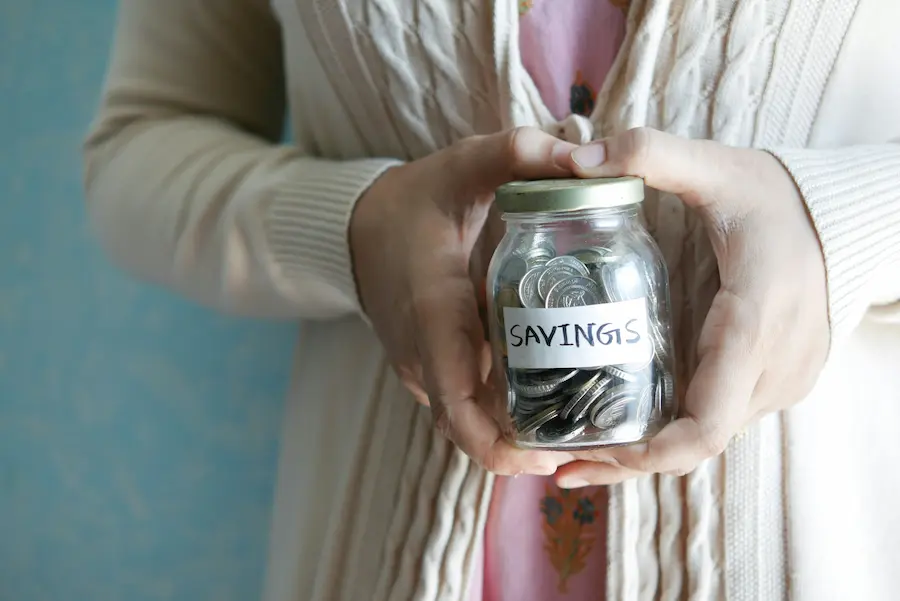
Here’s where most advice gets it wrong. Saving money when you’re living paycheck to paycheck isn’t about deprivation or punishing yourself. It’s about creating options.
Every dollar you save is a dollar that gives you more control over your life. It’s a dollar that means you’re not completely panicked when your car needs new brakes. It’s a dollar that means you can eventually stop living in constant financial stress.
You’re not being cheap. You’re being strategic. You’re not missing out. You’re choosing your financial security over temporary comfort. That’s not something to feel guilty about. That’s something to feel proud of.
This mindset shift matters because if you approach saving money from a place of scarcity and resentment, you won’t stick with it. But if you see it as gradually building the life you actually want, it becomes something worth doing.
Automate Even Tiny Amounts
You don’t need to save $500 monthly to make progress. Start with what feels possible, even if that’s just $10 per paycheck.
Set up an automatic transfer from checking to savings the day after you get paid. Make it small enough that you won’t even notice it’s gone. The amount matters less than the habit.
Once you’ve successfully saved $10 per paycheck for two months, increase it to $15. Then $20. Small automatic transfers build both your savings account and your confidence.
Buy Secondhand for Non-Essential Items
Thrift stores, Facebook Marketplace, Craigslist, and local buy-nothing groups are full of perfectly good items that people are selling or giving away.
Clothes, furniture, kitchen items, kids’ toys, books, sporting equipment, and home decor can all be found secondhand at a fraction of retail cost. New items lose most of their value the moment they’re purchased anyway.
Buying used isn’t settling for less. It’s refusing to pay inflated prices for items that work exactly the same whether you bought them new or not.
Ask About Assistance Programs You Might Qualify For
Many utility companies offer assistance programs for low-income customers that reduce monthly bills. Phone companies have discounted plans through programs like Lifeline. Some areas offer reduced-cost internet for qualifying households.
Check if you qualify for SNAP benefits, WIC, reduced-cost healthcare through the marketplace, or local assistance programs for things like childcare, heating costs, or prescription medications.
There’s no shame in using programs designed to help people exactly in your situation. That’s literally what they exist for.
Sell Items You Don’t Use
Look around your home honestly. Most people have hundreds or even thousands of dollars worth of stuff they never use just sitting in closets and garages.
Old electronics, clothes that don’t fit, kitchen gadgets you never touch, books you’ll never reread, furniture you don’t need, they all have value to someone else.
Selling items takes effort, but it’s also one of the fastest ways to put cash in your pocket right now. List a few items on Facebook Marketplace or take a bag of clothes to a consignment shop. Even an extra $100 can make a real difference when money is tight.
Review and Reduce Transportation Costs
Transportation is often the second-largest monthly expense after housing. If you’re spending $400 monthly on a car payment plus insurance and gas, that’s nearly $5,000 annually.
Can you carpool to work even two days a week? Can you combine errands into one trip instead of making multiple drives? Is public transportation a realistic option for some trips?
If your car payment is strangling your budget, it might be worth considering whether you could sell it and buy a reliable used car with cash or a much smaller loan. This isn’t always possible, but it’s worth honestly evaluating.
Frequently Asked Questions
How much should I try to save each month when I’m living paycheck to paycheck?
Start with whatever amount won’t cause additional financial stress, even if that’s just $10 or $20 monthly. The goal initially is building the habit and proving to yourself that saving is possible. As you find more areas to cut costs, you can gradually increase the amount. Progress matters more than perfection.
What should I do first, save money or pay off debt?
Build a small starter emergency fund first, even just $500 to $1,000. This prevents you from going further into debt when unexpected expenses hit. Once you have that buffer, focus on high-interest debt while maintaining small automatic savings contributions. You need both some savings and a debt payoff plan, just in different proportions depending on your situation.
How can I save money on groceries without eating the same thing every day?
Focus on versatile ingredients that work in multiple meals. Rice, beans, eggs, pasta, chicken, and frozen vegetables are inexpensive and can be prepared dozens of different ways. Plan meals that share ingredients so you’re not buying single-use items. Shopping sales and cooking larger batches to freeze also stretches your grocery budget without sacrificing variety.
Is it really worth trying to save money if I can only save tiny amounts?
Yes. Saving $25 monthly might not sound impressive, but that’s $300 annually, which is enough to cover many unexpected expenses that would otherwise go on a credit card. More importantly, building a saving habit when money is tight creates skills and confidence that will serve you as your income grows. Every financial improvement starts somewhere small.
What’s the fastest way to free up money in my budget right now?
Review your subscriptions and cancel at least one today. Check your last month of bank statements for recurring charges you forgot about. These are often the easiest cuts because you’re already living without consciously using those services. The money gets freed up immediately with your next billing cycle.
Should I feel guilty about spending any money on things I enjoy?
No. Sustainable saving isn’t about eliminating all joy from your life. It’s about being intentional with limited resources. If having one streaming service or getting coffee once a week genuinely improves your quality of life and fits within a thoughtful spending plan, that’s fine. The goal is cutting mindless spending, not punishing yourself.
You’re Already Doing Better Than You Think
Living paycheck to paycheck is exhausting, and trying to save money on top of that can feel impossible. But the fact that you read this entire article means you’re already taking action.
You don’t have to implement all 17 strategies at once. Pick two or three that feel most doable for your situation and start there. Give yourself a month to make them habits, then add another one or two.
Small changes compound over time. The $10 you save this week by packing lunch becomes $520 annually. The subscription you cancel today is $120 back in your pocket this year. These aren’t life-changing amounts individually, but together they create breathing room.
Ready to make smarter money moves? Explore more guides on side hustles, budgeting, investing, and building wealth right here. Join the Cash Clarity Finance Newsletter to get clear, actionable tips that help your money work for you.