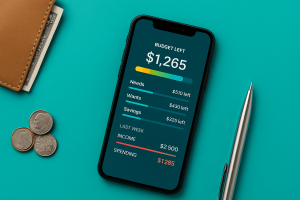

Most people know they should be more organized with their money. The problem isn’t awareness. It’s that the tools they’ve tried, the complicated spreadsheets, the apps that require too much setup, the budgeting systems built for someone else’s life, never quite stuck. A money planner that actually works isn’t the most sophisticated one. It’s the one you’ll genuinely use every single week.
Whether you prefer a physical notebook, a printed planner, or a digital setup, the money planner ideas in this list are designed to bring real structure to your finances without making the whole thing feel like a second job. Pick the ones that fit how you actually think and move through your days. Even implementing three or four of these consistently will change how in control you feel about your money.
1. A Monthly Budget Spread
This is the foundation of any money planner worth having. A monthly budget spread gives you a single place to record your income, list your fixed and flexible expenses, and see at a glance whether the math works in your favor this month.
Keep it simple. Two columns, income on one side and expenses on the other, with a running total at the bottom. The goal isn’t a beautiful layout. It’s a clear picture of where your money is going before the month begins rather than after it ends.
2. A Bill Payment Tracker
Late fees are one of the quietest money leaks there is. A bill payment tracker lists every recurring payment you owe, the due date, the amount, and a checkbox to mark it paid. Running through it once a week takes five minutes and eliminates the low-grade anxiety of wondering whether you’ve missed something.
Include everything: subscriptions, utilities, insurance, loan payments, memberships. Seeing them all in one place also tends to surface charges you forgot you were paying, which often leads to some immediate cancellations.
3. A Net Worth Tracker
Your net worth is the single most honest measure of your financial progress. It tells you whether all the budgeting, saving, and paying down debt is actually moving your overall position in the right direction.
Add a simple net worth tracker to your planner and update it monthly. List your assets, list your liabilities, subtract the second from the first. Watch the number. When it moves consistently in the right direction, even slowly, it confirms that what you’re doing is working. That confirmation matters more than most people realize for staying motivated over the long term.
4. A Savings Goal Tracker
Give each savings goal its own visual tracker. A progress bar, a thermometer you color in, or even a simple fraction like 340/1000 that you update as the balance grows. Seeing your progress toward a specific target is significantly more motivating than watching a general savings account grow without any clear destination attached to it.
Name each goal. Emergency fund. Holiday trip. New laptop. Car repair buffer. Named goals are harder to raid than unnamed ones because spending the money means abandoning something specific rather than just dipping into a vague pool of savings.
5. A Debt Payoff Tracker
If you’re paying down debt, this page might be the most satisfying one in your entire planner. List each debt with its starting balance, current balance, interest rate, and minimum payment. Update it monthly. Watch the numbers shrink.
The visual progress of a debt payoff tracker does something important: it makes a process that can feel invisible, since minimum payments move balances slowly, feel concrete and real. Every extra payment you make shows up immediately on the page. That immediacy is one of the best motivators for staying on a payoff plan through the long months it can take.
6. A Weekly Spending Check-In
A weekly check-in is a short, low-effort habit that prevents small overspending from becoming a monthly problem. Set aside ten minutes at the end of each week to review what you spent, compare it to your budget, and note any categories that need adjusting in the week ahead.
This isn’t about judgment. It’s about awareness. Most budget failures happen not because people make one catastrophic decision but because small daily spending quietly accumulates without anyone noticing until the end of the month. A weekly check-in catches that drift early enough to correct it.
7. A Sinking Fund Tracker
Sinking funds are dedicated savings pots for known upcoming expenses: car maintenance, annual insurance premiums, holiday gifts, back-to-school costs, medical appointments. The idea is to set aside a small amount each month so that when the expense arrives it doesn’t derail your budget.
A sinking fund tracker in your planner lists each fund, the target amount, the monthly contribution, and the current balance. It turns unpredictable annual expenses into manageable monthly line items, which is one of the most practical shifts you can make in how you manage money.
8. An Income Tracker
If your income varies month to month, whether from freelancing, a side hustle, commission-based work, or any other variable source, tracking it carefully is essential. An income tracker records every source of income, the amount, and the date it arrived.
Over time this gives you a clear picture of your income patterns: which months tend to be stronger, which tend to be leaner, and what your realistic baseline actually is. That information is what allows you to budget conservatively and make smarter decisions about when to save aggressively and when to be more cautious.
9. A Financial Goals Page
Every money planner should have a dedicated page for your financial goals, both short-term and long-term. Write them out specifically: not “save more” but “save $3,000 by September.” Not “pay off debt” but “eliminate the credit card balance by March.”
Return to this page at the start of each month. Let your goals shape how you approach your budget, your spending decisions, and your savings priorities for the weeks ahead. Goals that are written down and revisited regularly are significantly more likely to be achieved than goals that exist only in your head.
10. A No-Spend Day Tracker
A no-spend day is any day where you make zero discretionary purchases. No coffee runs, no impulse online shopping, no takeout. Tracking how many no-spend days you have each month adds a game-like quality to mindful spending that many people find genuinely motivating.
Set a monthly target, maybe ten or twelve days, and track your progress. On the days you hit it, mark it. Watch the pattern across the month. This simple tracker tends to make people far more aware of daily spending habits than any budget category ever does because it operates at the level of individual days rather than monthly totals.
11. A Subscription Audit Log
Do this audit at least twice a year and record the results in your planner. List every subscription and recurring charge: streaming services, apps, memberships, software, meal kits, beauty boxes. Next to each one write the monthly cost, the last time you actively used it, and whether it stays or goes.
The numbers that come out of this exercise consistently surprise people. The average household is paying for more recurring charges than they realize, and a meaningful percentage of those charges are for things they barely use. A subscription audit log makes this visible and actionable rather than vague and easy to ignore.
12. A Reflection and Reset Page
At the end of each month, spend fifteen minutes with a reflection page. What went well financially this month? What didn’t? Where did the budget break down and why? What would you do differently next month?
This isn’t about self-criticism. It’s about treating your finances as a system you’re actively managing and improving rather than something that happens to you. The monthly reflection is where the real learning lives, and the insights it produces tend to compound over time into significantly better financial decision-making.
13. A Pay Yourself First Log
Record every savings and investment contribution you make on payday before anything else is spent. Keeping a log of these contributions builds a visual record of your consistency that becomes genuinely motivating over time.
It also shifts the psychological framing of saving. When you can see a log of consistent contributions stretching back over months, saving stops feeling like a sacrifice and starts feeling like a habit you’ve built and are maintaining. That shift in how it feels changes how sustainable it is.
14. A Financial Education Tracker
Building financial knowledge is one of the highest-return investments you can make, and tracking it in your planner makes it a deliberate practice rather than something that happens accidentally.
Log every book you finish, podcast episode you listen to, or course you complete related to money, investing, or financial planning. Note the one thing you learned that changed how you think. Over a year, this log becomes a record of genuine financial growth that sits alongside your savings and investment progress as evidence that you’re building something lasting.
15. A Year in Review Page
Once a year, dedicate a full page to reviewing your financial year. How did your net worth change? Which goals did you hit? What did you learn? What do you want to prioritize differently next year?
This annual review is where short-term monthly efforts connect to long-term financial vision. It’s the page that shows you, in concrete terms, what a year of consistent effort actually produces. And for most people who do it honestly, the answer is more than they expected when they started.
The Mindset Shift: A Planner Only Works If You Treat It Like a Relationship

The biggest mistake people make with money planners is treating them like a project to complete rather than a relationship to maintain. They set everything up beautifully in January and by March the planner is sitting untouched on a shelf.
A money planner works the same way any good habit works: through consistent, imperfect engagement over time. You don’t need to fill in every page perfectly. You don’t need to do every weekly check-in without fail. You need to keep coming back to it, even after the weeks you skipped, even when the numbers aren’t where you want them to be, even when life got busy and the planner sat closed for two weeks.
The relationship you build with your finances through regular engagement, however imperfect, is what gradually turns financial stress into financial confidence. The planner is just the tool that makes that engagement easier and more consistent. Show up for it and it will show up for you.
Frequently Asked Questions
Do I need a physical planner or will a digital one work just as well?
Both work, and the best choice is whichever format you’ll actually use consistently. Physical planners work well for people who enjoy writing by hand and want something tactile and away from screens. Digital options like Notion, Google Sheets, or Canva templates work well for people who spend most of their time on devices and want something easily updated. Some people use both, a digital tracker for numbers and a physical planner for goals and reflections.
How much time does maintaining a money planner actually take?
Less than most people expect. A weekly check-in takes around ten minutes. Monthly updates to trackers like net worth and debt balances take another fifteen to twenty minutes. The annual review takes an hour. The bulk of the value comes from those short, consistent sessions rather than long complicated ones.
What if I fall behind and miss several weeks?
Pick up where you left off without spending energy on what you missed. A planner you return to after a two-week gap is infinitely more valuable than one you abandon because falling behind feels like failing. The goal is a long-term relationship with your finances, not a perfect record.
Should I track every single purchase in my planner?
Not necessarily. Tracking every purchase is useful for one month if you want to understand your spending patterns, but it’s too time-consuming to sustain long-term for most people. A better approach is tracking spending by category in your weekly check-in rather than logging individual transactions daily.
Can I start a money planner at any point in the year?
Absolutely. There’s nothing special about January. A money planner started in April or August or November is just as effective as one started at the beginning of the year. The only starting point that matters is the one you actually commit to.
What’s the single most impactful page to start with?
The monthly budget spread. Everything else builds on having a clear picture of your income and expenses. Once that page is working consistently, adding the other trackers one at a time is much easier than trying to set up everything at once.
Start With One Page
You don’t need to implement all fifteen ideas at once. Choose one or two that address your biggest financial pain point right now and build from there. The monthly budget spread and the bill payment tracker together are enough to change how in control you feel about your money within the first month.
The rest can come gradually, added when you’re ready and when they serve a real purpose in your financial life. A money planner that grows with you is far more sustainable than one that overwhelms you on day one.
If you found this helpful, you might also like:
- Best Budgeting Apps for Beginners (Ranked by Ease of Use)
- Investing Vision Board Ideas to Visualize and Achieve Financial Freedom
Ready to make smarter money moves? Explore more guides on side hustles, budgeting, investing, and building wealth right here. Join the Cash Clarity Finance Newsletter to get clear, actionable tips that help your money work for you.